

Thailand’s temple art and architecture are among the most visually striking and spiritually profound aspects of the country’s cultural identity. Thai temples, or ‘wats’, are more than just places of worship—they are living expressions of Buddhist teachings, artistic mastery, and architectural innovation
By: Sandrine Martin
The foundation of Thai temple architecture is rooted in Theravāda Buddhism, which was introduced to Thailand over a thousand years ago from India and Sri Lanka. As Buddhism took hold, temple construction became a means for kings and wealthy patrons to express religious devotion and solidify their social status. Over centuries, Thai architects and artisans blended Indian, Khmer, and Chinese influences with indigenous styles, creating a unique architectural language that is distinctively Thai.
The concept of a Thai temple reflects the Buddhist view of the universe. The layout and design are inspired by Mount Meru, the sacred centre of the universe in Buddhist and Hindu cosmology. Temples are often enclosed within whitewashed walls, symbolising the boundary between the material world and the spiritual realm.
Wat architecture adheres to consistent principles. A wat, with few exceptions, consists of two parts: the Phutthawat and the Sangkhawat.
Architectural Elements of the Phutthawat
The phutthawat is the area which is dedicated to Buddha. It generally contains several buildings, each with symbolic and functional significance:
Ubosot (Ordination Hall)
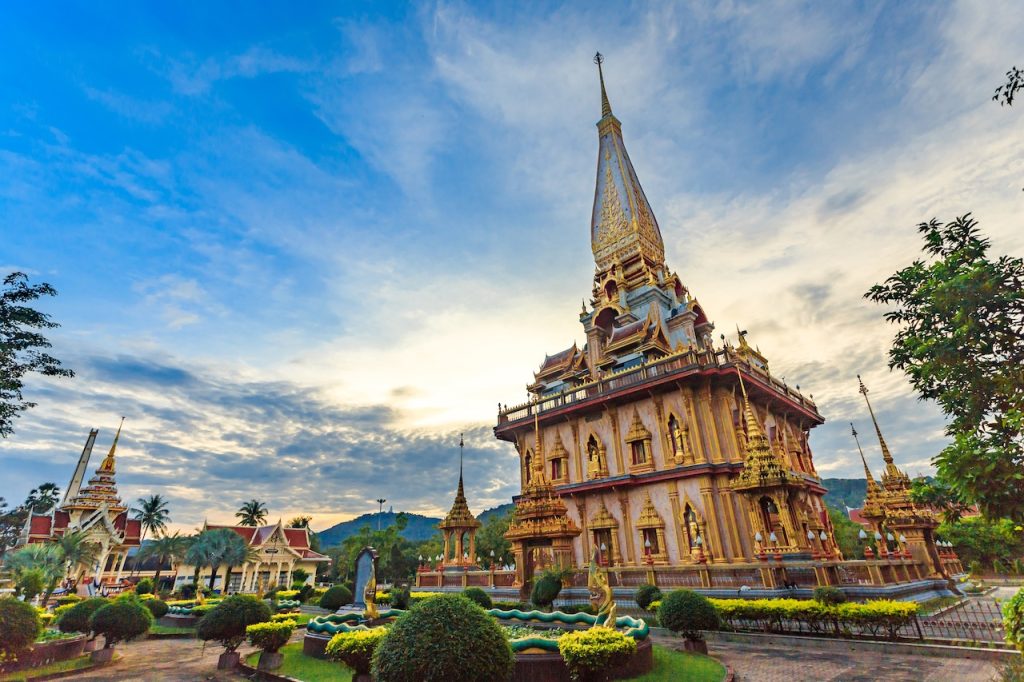
The ubosot is the most sacred structure in a Thai temple, where monks perform religious ceremonies and take their vows. It is usually elevated on a platform and surrounded by eight boundary stones (sema) that mark the sacred area. The ubosot is distinguished by a multi-tiered roof adorned with chofah—elongated, bird-like finials that resemble the mythical Garuda.
Viharn (Assembly Hall)
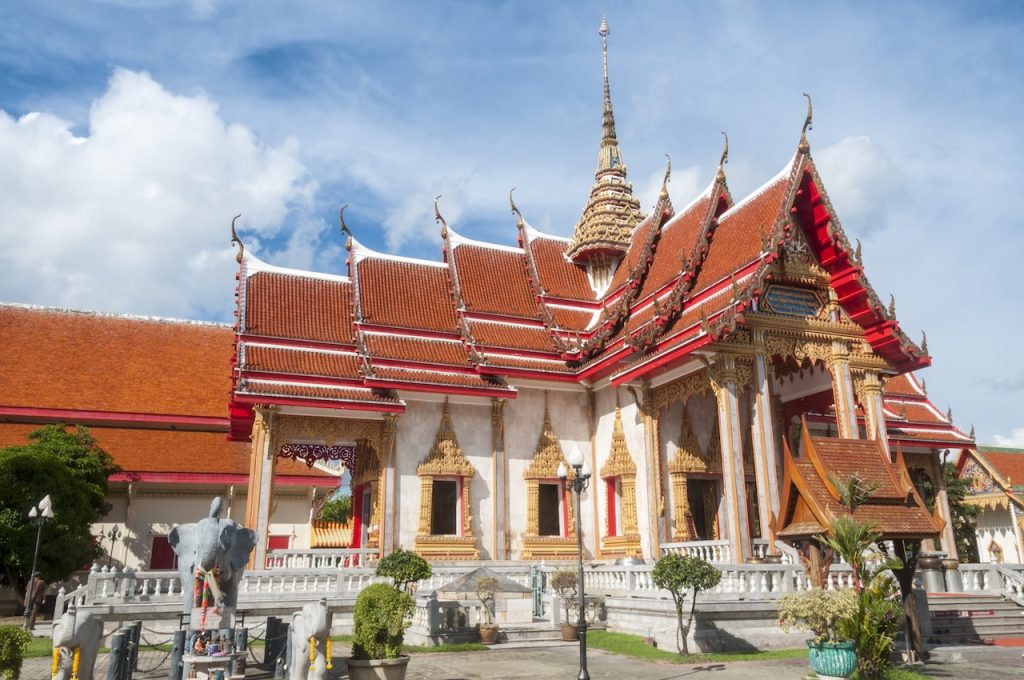
The viharn is where the faithful gather to worship and listen to teachings. It houses important Buddha images and is often more accessible to laypeople than the ubosot. The architectural style is similar to the ubosot, but with more decorative elements such as gilded columns, carved wooden panels, and mural paintings depicting the life of the Buddha.
Mondop (Multi Purpose Hall)
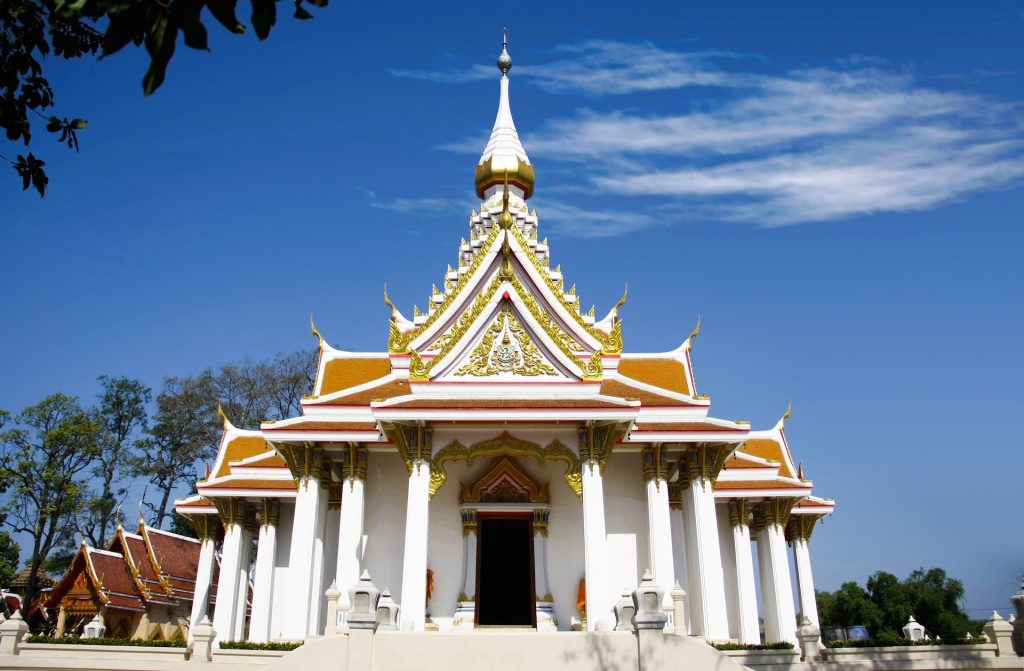
The mondop is a building form that features a square or cruciform building, usually with a pointed roof. Mondops may be used for various functions, including as scripture halls (ho trai) and for housing religious artefacts.
Chedi (Stupa)
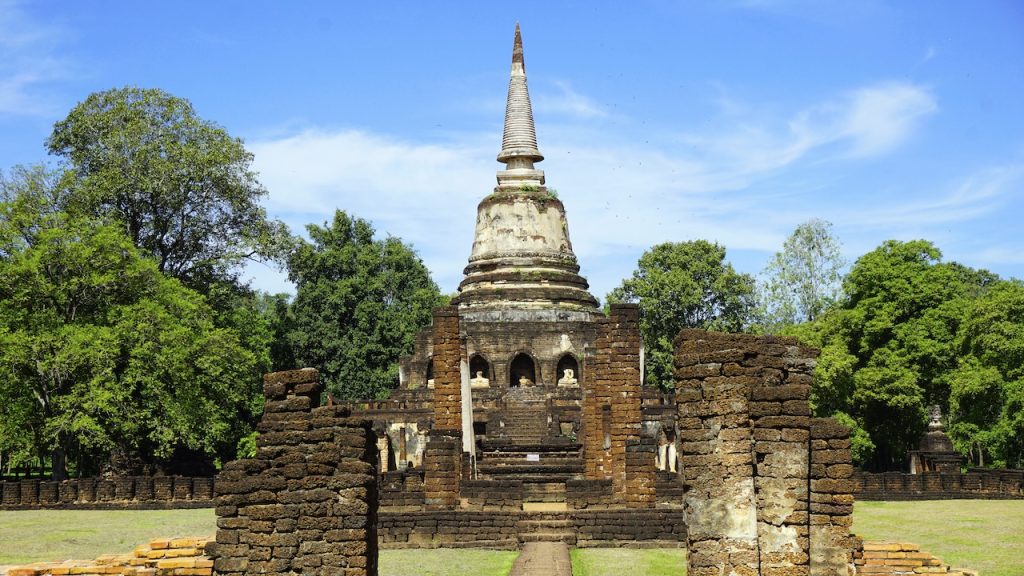
The chedi, or stupa, is a bell-shaped structure that typically enshrines sacred relics of the Buddha or important monks. Thai chedis are inspired by Indian and Sri Lankan models but have evolved into more slender, elongated forms, often covered in gold leaf or mosaic tiles that shimmer in the sunlight. The most famous example is the golden chedi at Wat Phra Kaew in Bangkok.
Prang
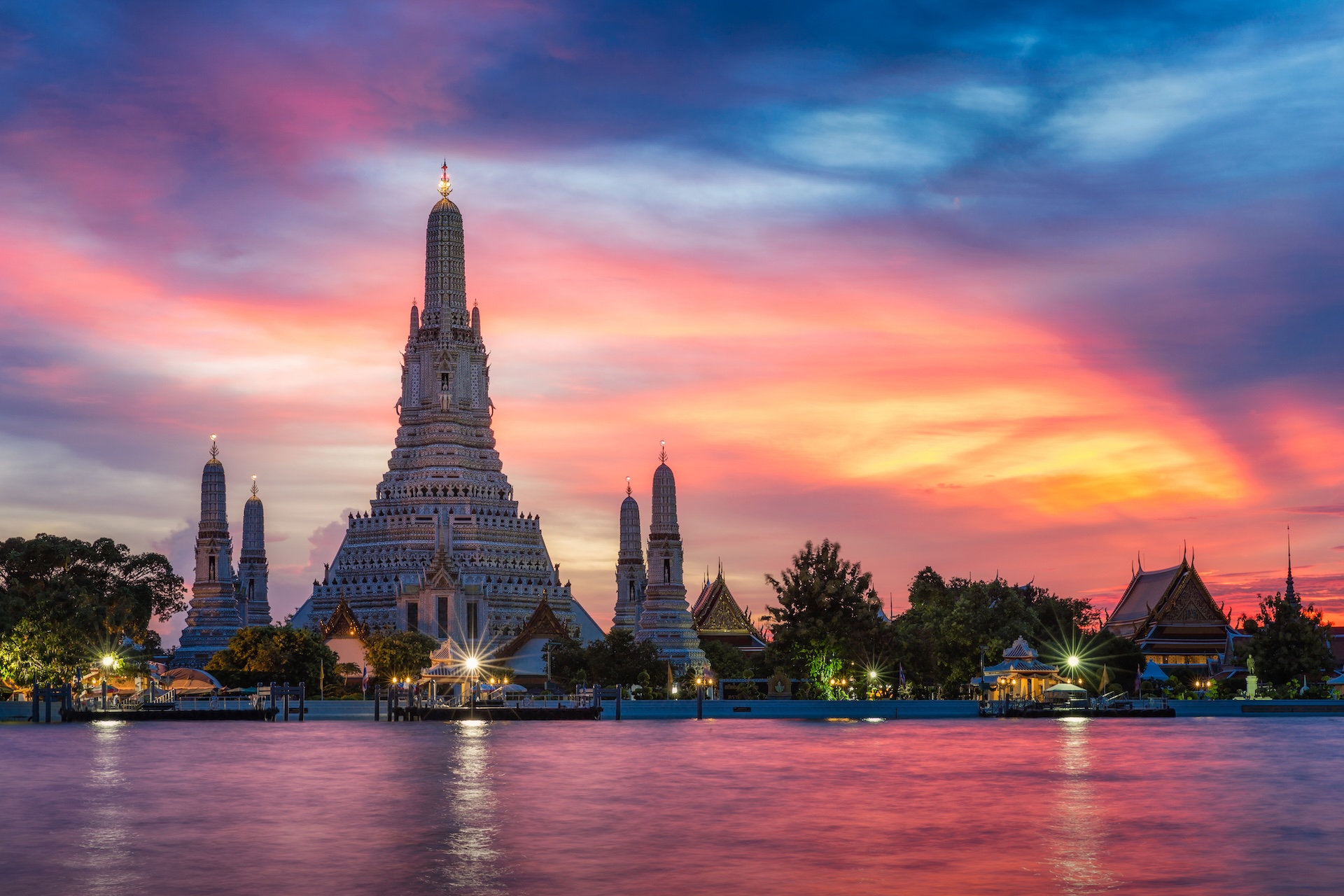
The prang is a tall, tower-like structure that reflects the influence of Khmer temple design. Unlike the rounded chedi, the prang is more angular and often decorated with intricate carvings of deities and mythological creatures. The prang at Wat Arun (Temple of Dawn) in Bangkok is one of the most iconic examples of this style.
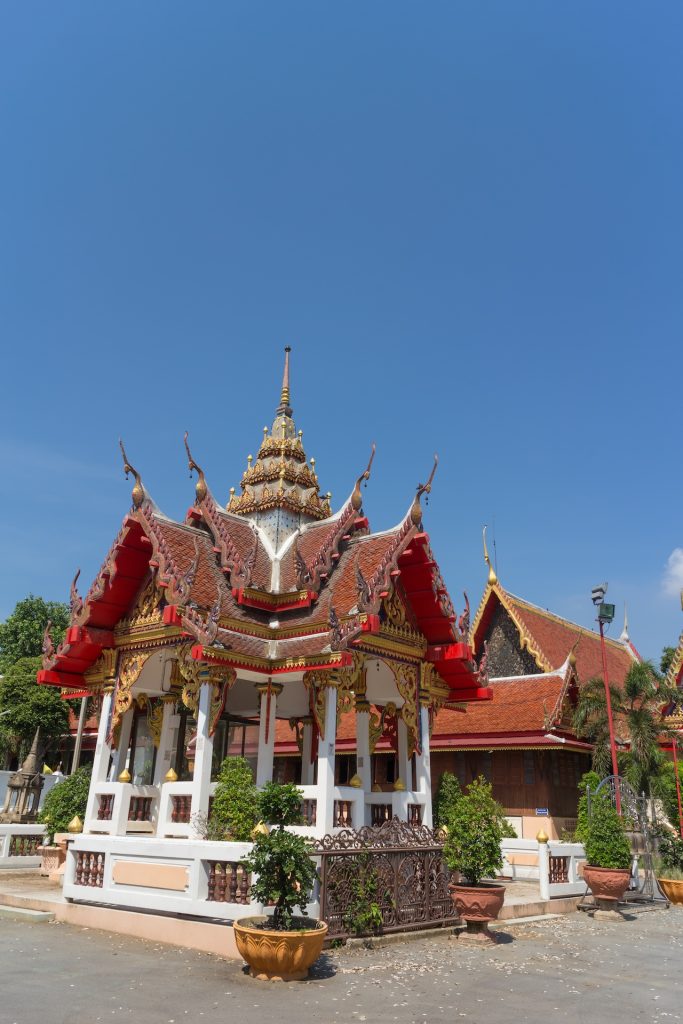
Sala (Pavilion)
The sala is an open-sided pavilion that serves as a rest area for monks and visitors. It is often decorated with elaborate roof carvings and colourful tile work.
Ho Trai (Library)
The ho trai is the temple library where sacred scriptures are kept. It is often elevated on stilts over a pond to protect the manuscripts from humidity and pests.
Architectural Elements of the Sangkhawat
The sangkhawat contains the monks’ living quarters. It lies within the wall surrounding the temple compound. The sangkhawat can have the following buildings:
Kuti (Living quarters)
Originally a small structure, built on stilts, designed to house a monk, with its proper size defined in the Sangkhathiset, rule 6, to be 4.013 by 2.343 metres. Modern kutis take the shape of an apartment building with small rooms. Most living quarters also contain other functional areas such as the kitchen.
Ho rakhang (Bell Tower)
The sangkhawat can contain the ho rakhang and even the ‘Sala Kan Parian’, which is the sermon hall.
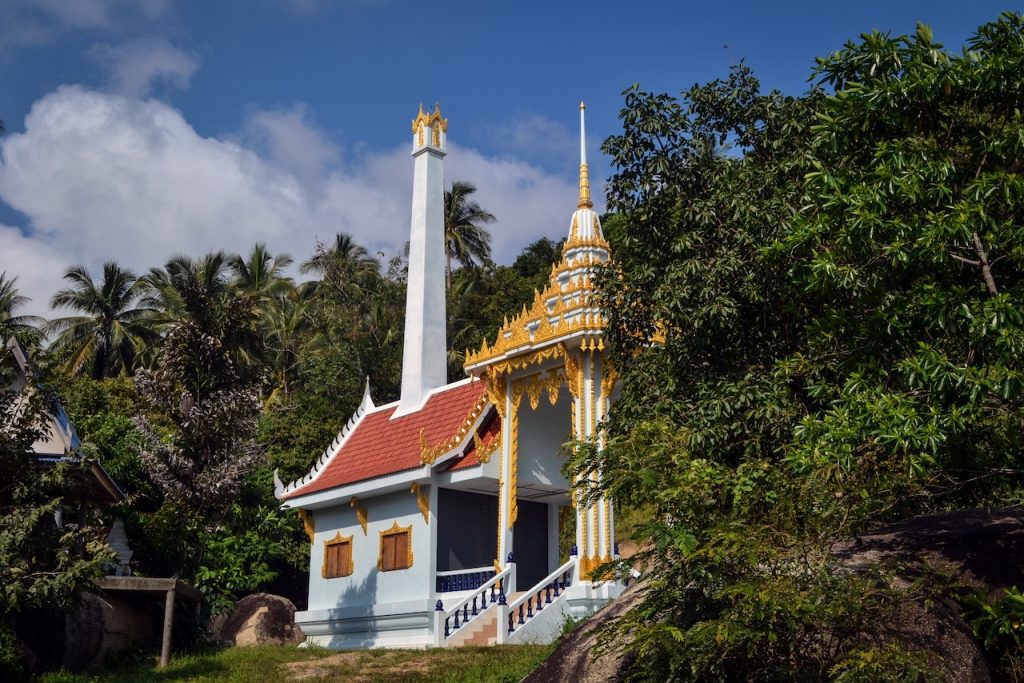
Meru (Cremation Building)
The meru is the cremation building in a Thai temple. It is a specially designated structure used for cremation ceremonies, often featuring intricate designs symbolising Mount Meru, the center of the Buddhist and Hindu cosmos. In larger wats, this structure may be temporary for royal or significant funerals, while smaller wats often have a permanent cremation area.
Artistic Elements and Decorative Styles
Thai temple art is a blend of religious symbolism and artistic expression. The most prominent features include:
Murals and Frescoes
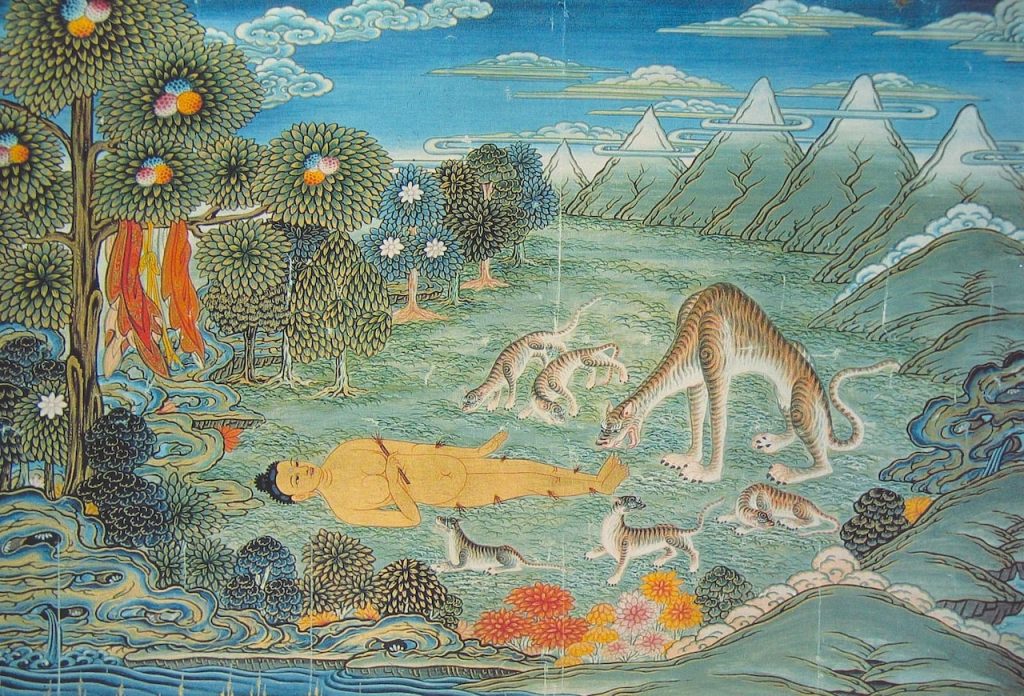
Temple walls are often covered with detailed murals depicting the Jataka tales (stories of the Buddha’s previous lives), scenes from Buddhist cosmology, and moral teachings. The murals serve not only as decoration but also as visual tools for teaching Buddhist principles.
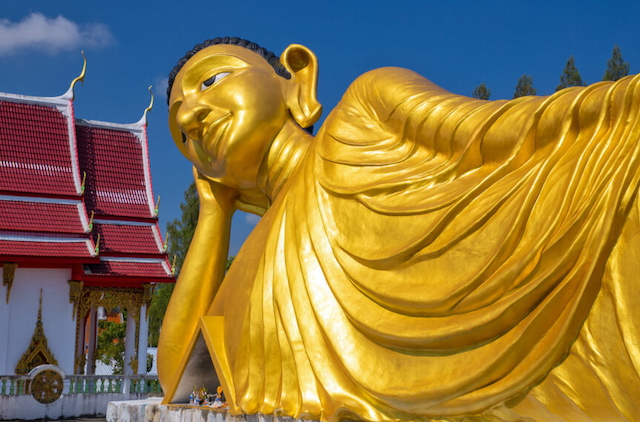
Buddha Images
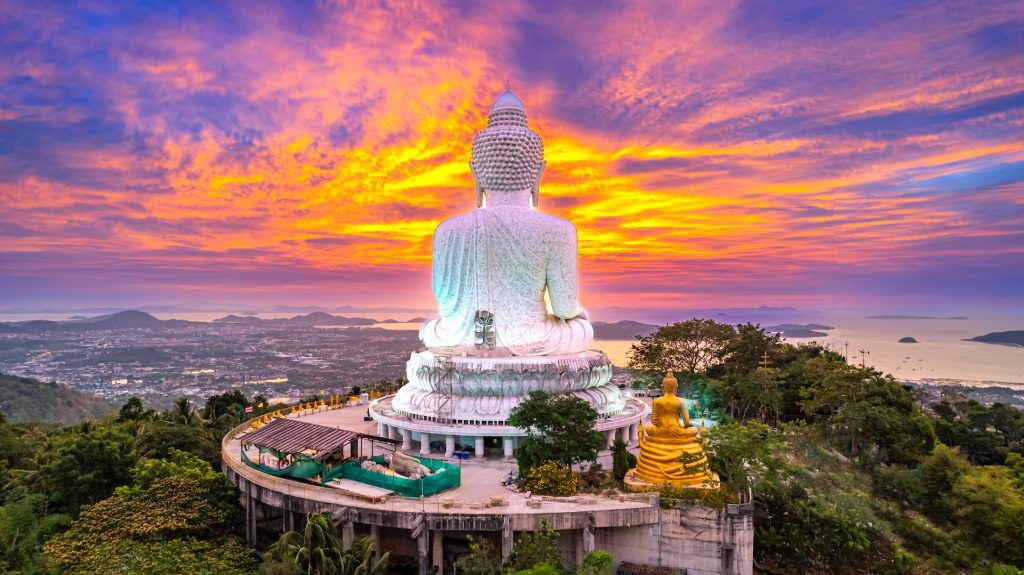
Statues of the Buddha are central to Thai temple art. They are crafted from various materials, including bronze, gold, stone, and wood. The Buddha is depicted in different postures—seated in meditation, reclining, or standing—each representing a different aspect of his life and teachings.
Carved Doors and Windows
Temple doors and windows are intricately carved and gilded, often depicting mythological creatures, floral motifs, and scenes from Buddhist scriptures.
Roof and Stair Decorations
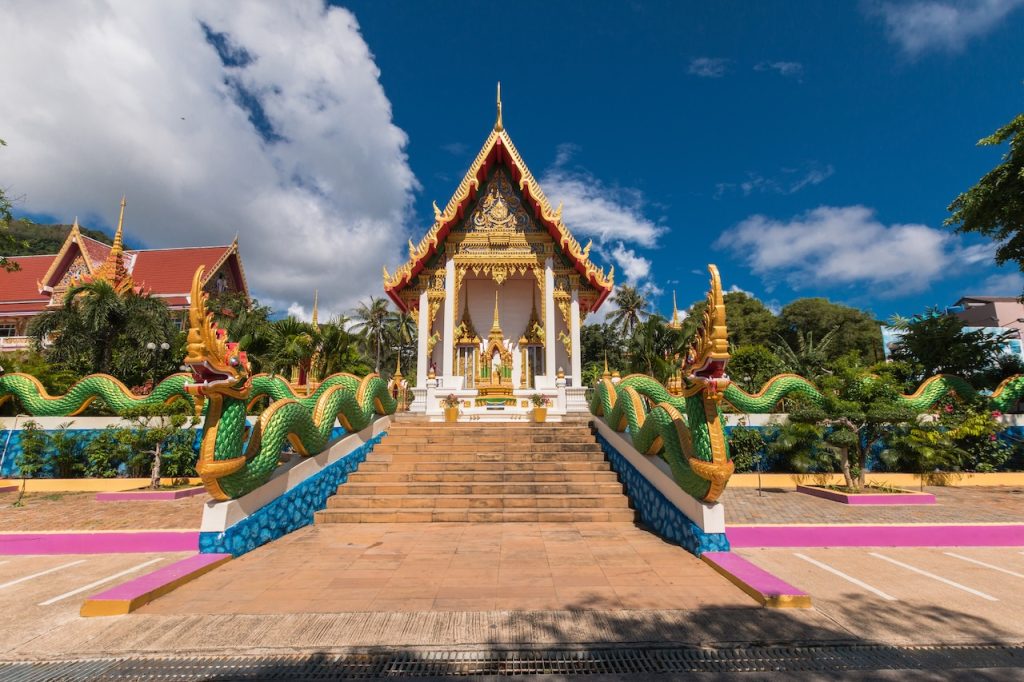
The multi-tiered roofs are adorned with chofah and naga (serpent) motifs, which are believed to protect the temple from evil spirits. Nagas also often appear on each side of entrance staircases. The sweeping curves and pointed edges give the roofs a dynamic, upward-reaching quality, symbolising the path to enlightenment.