

Reign in the Thai New Year with a splash
by: Angela Scott
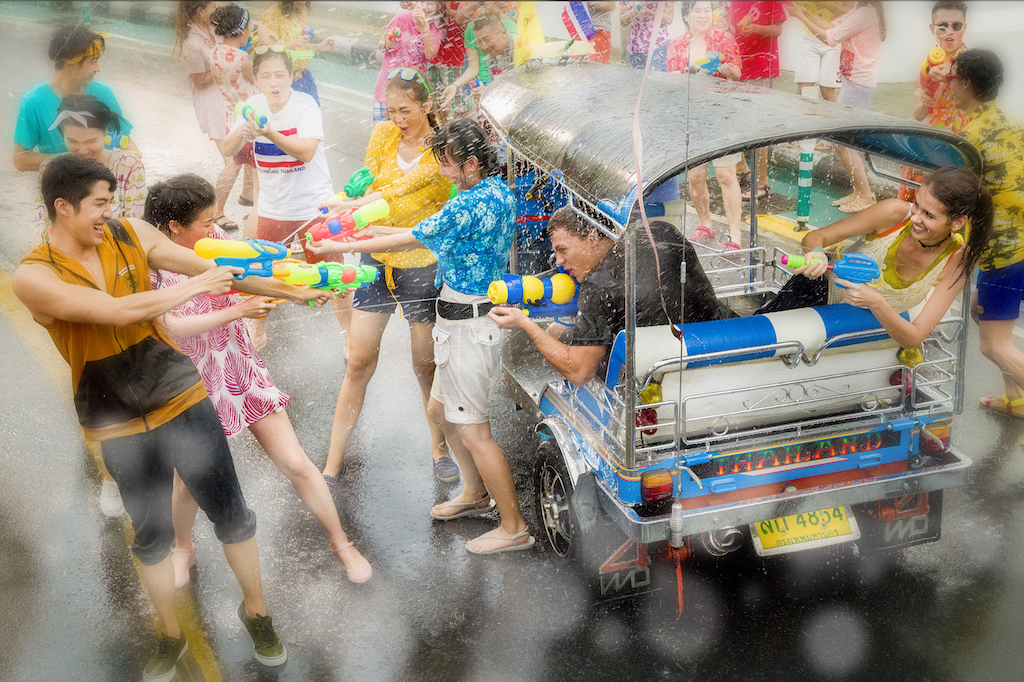
Splashes of water and squeals of laughter ring through the air as people in bright tropical shirts take to the streets trying to beat the heat. This isn’t spring break or a water park…it’s Songkran.
Often known abroad as the Thai ‘water festival’, Songkran is a time of joy and carefree celebration marked by splashes of water, gleeful faces, colourful attire and lively parades. Although this Lunar New Year is celebrated throughout Southeast Asia, international travellers tend to flock to Thailand for unrivalled, water-filled festivities as Songkran is one of the country’s most important holidays.
Songkran through the Centuries
Although no one knows when people first started celebrating Songkran, it is believed to stem from Hinduism and the ancient Indian festival known as Makara Sankranti, which celebrates the astrological passage of the sun as it moves into a new zodiac. Songkran, which can be roughly translated as “moving,” “transiting” or “approaching,” is an adaption of this Hindu festival and celebrates the coming of the new year based on the lunar calendar in mid-April.
History also shows that local people visited Buddhist temples, known as Wats, to receive blessings and prayers from the residing monks. During their visit, they gave food and gifts to the monks as well as showed respect by pouring fragrant water over them or Buddha statues in a cleansing ritual. This water was then collected, taken back to the village, and used to bless elders and respected people of the community.
Thai Traditions
Over the years, Songkran became a time when families take time off work and come together to spend time with each other. People are sure to pay respect to their elders, make merit at their local temples, and clean their homes.
Water is an essential aspect of Songkran because it is spiritually purifying. It symbolically washes away old sins and grievances, allowing the New Year to begin with happiness and prosperity.
Family members, particularly the younger generations, drizzle jasmine-scented water over the hands and shoulders of village elders and older family members using small intricately carved silver bowls. Traditionally, people also dipped their fingertips in the water and softly flicked droplets on others as a gentle, respectable way to offer a blessing of fortune and happiness…and the seed of today’s city-wide water fights.
Another significant aspect of this religious holiday is visiting a Buddhist temple and making merit. This often includes elaborate ceremonies with a ritualist bathing of a Buddha statue and subsequent processions. Local people also give offerings of food, gifts, and money to the monks along with bringing a small amount of sand to the temple. This is to replace the grains of sand that have been gradually carried away on worshippers’ shoes as they depart the temple grounds. The sand is then constructed into pyramid-like chedis or pagodas decorated with colourful flags, streamers and monetary donations.
You’ll also notice Thais smearing an off-white paste or chalk-like substance on their faces. This natural powder, known as din sor pong, is combined with a little water and then painted on faces to ward off evil spirits and protect the wearer. Lastly, it is also very common for people to thoroughly clean their houses and rid their homes of dust and any unwanted or unused items. This mirrors the ritual of cleansing oneself with water on Songkran.
Contemporary Celebrations
As with many religious or cultural holidays, the spiritual side of the celebrations have gradually shifted to those of merriment. Songkran is no exception and there has been a notable change in how people celebrate the holiday even within the last decade.
Although locals continue to make merit at temples and tidy up their houses as part of their New Year’s traditions, Songkran has gone mainstream and includes people of all different nationalities in the festivities. It has transformed into a fun, friendly and chaotic celebration featuring high-powered water guns, icy buckets of water
and hoses spraying more water in every direction. You’ll see young children flinging water with small plastic buckets or spraying passersby with small water guns, teenagers carrying super soakers to spray motorcyclists and cars as they drive by, and even adults sneaking up behind one another to pour water down their backs or pretending to get “shot”.
In some of the major tourist hubs such as Bangkok and Phuket, hotels and bars host competitions for the world’s wettest party. There are also parties where patrons get lost in mountains of white foam and enjoy spectacular light and sound shows.
In beach towns, the tradition of taking sand back to the temple to create sand pagodas has transformed into elaborate competitions. Artists from all over come to create stunning sand sculptures, which are torn down a day later to remind us all that beauty is fleeting.
When and Where to Celebrate Songkran in Phuket
Songkran is a three-day religious festival from 13 to 15 April every year. However, the celebrations start building up a day or two early and extend a few days longer. For the most atmospheric places to experience Songkran try:
BANGLA ROAD, PATONG – Located in Patong’s bustling district, Bangla Road transforms into a water-soaked wonderland during Songkran. As locals and tourists fill the streets armed with water guns and buckets, the pulsating music, colourful lights, and energetic crowd create an atmosphere of pure excitement. Dive into the madness, frolic in the water fights, and let loose as water splashes from every direction. Be prepared to get drenched and embrace the contagious laughter and camaraderie that define this celebration.
OLD PHUKET TOWN – For a more traditional Songkran experience, head to Old Phuket Town. Adorned with beautifully ornate colonial buildings, this historic neighbourhood radiates charm and cultural significance. During the festival, the streets come alive with processions, alms-giving ceremonies, and locals engaging in spiritual rituals. Wander through the vibrant streets, immerse yourself in the essence of Thai traditions, and watch as locals respectfully sprinkle water on statues and elders as a symbol of purification and good fortune. The water fights still happen, but nothing like the carefree chaos of Bangla road.
PATONG BEACH – World-famous Patong Beach may be known for its lively nightlife, but during Songkran, it transforms into a thrilling water playground. Crowds gather by the water’s edge armed with water guns, eagerly awaiting the perfect opportunity to douse passersby. The beach offers a perfect backdrop for epic water battles, where families, friends, and strangers joyfully engage in friendly combat. Lounging by the shore while sipping on drinks and enjoying the festive atmosphere adds an extra layer of relaxation to this exhilarating festivity.
KARON OR KAMALA BEACHES – For a more laid-back Songkran experience, make your way to Karon Beach (in the south west) or Kamala Beach (in the central west). Both beaches boast pristine white sands and tranquil family ambiences as a serene setting to celebrate amidst nature’s beauty. You can partake in the water fights or simply watch the festivities unfold. As the sun sets, find a beachfront restaurant, indulge in delicious Thai cuisine, and relish the beautiful moments of Songkran with your loved ones and mates.
DO’S AND DON’TS WHEN CELEBRATING SONGKRAN
DO protect your electronic devices by investing in waterproof cases or bags – if you go out, you will get wet.
DO use public transportation or book accommodations within walking distance of main events.
DO respect elders and young children by gently sprinkling water on them rather than spraying them.
DON’T forget to smear on sunblock, sunglasses and drink plenty of bottles water.
DON”T spray water purposefully in people’s mouths, eyes and ears.
DON’T wear revealing clothing or walk around shirtless or in bikinis.
SPRAY AND RECEIVE IN EQUAL QUANTITIES, AND WITH A SMILE ON YOUR FACE