
Hold onto your hats as we explore the vibrant noisy rituals and culinary delights of the Phuket Vegetarian Festival!
By: Warisara Siemsporn
Photos: Pete Atkinson, Vrisphuket, Yosuke Hasegawa, K. Hellon and Ellas Bitar
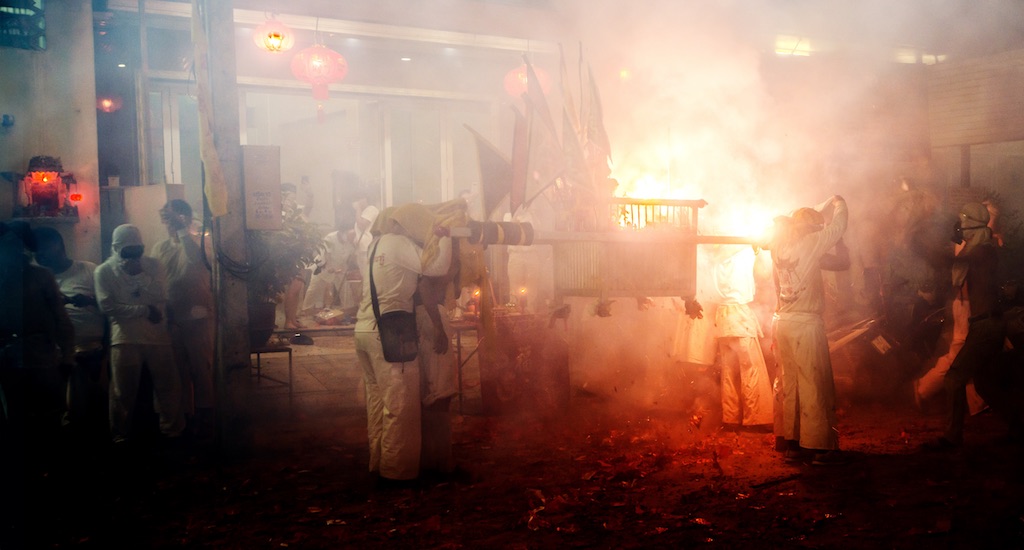
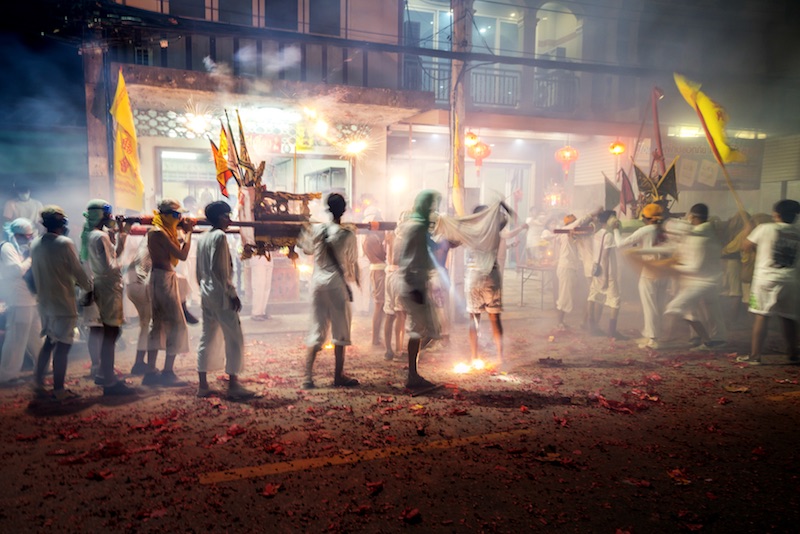
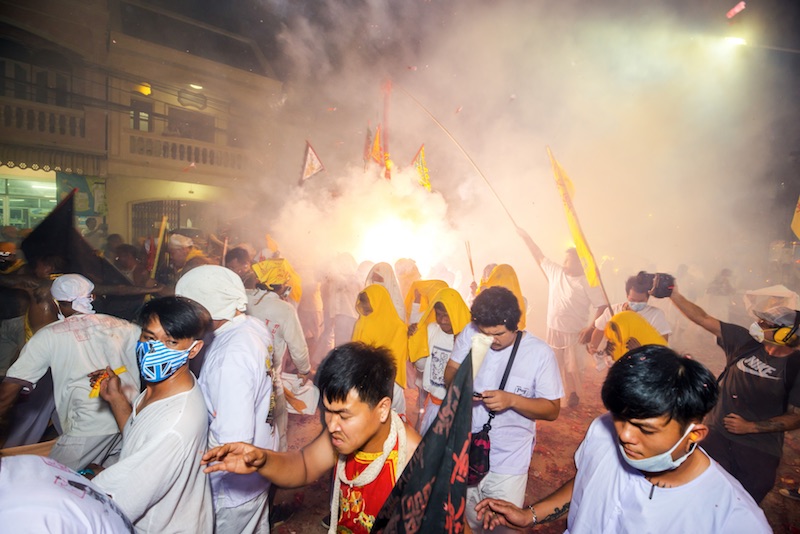
For nine days, every October across Thailand and particularly in Phuket, red and yellow bunting adorns the streets, Chinese lanterns glow at night and locals, with a Chinese heritage, dress up in all-white clothing. There are fire crackers, parades, food stalls, chants and ritual acts of cleansing; a spiritual atmosphere pervades. Yes folks, it is time for the annual Vegetarian Festival.
Some of the images in this story will be shocking to readers, the ritual facial skin piercing that takes place during the festival does look gruesome. Strangely enough though, whilst you might expect a lot of blood, the spiritual trance the participants find themselves in during the ritualised mutilation doesn’t seem to produce pain or blood. The piercing is done without anaesthetic, always inside or near the temples surrounded by other devotees with only iodine, petroleum jelly and surgical gloves as precautionary measures.
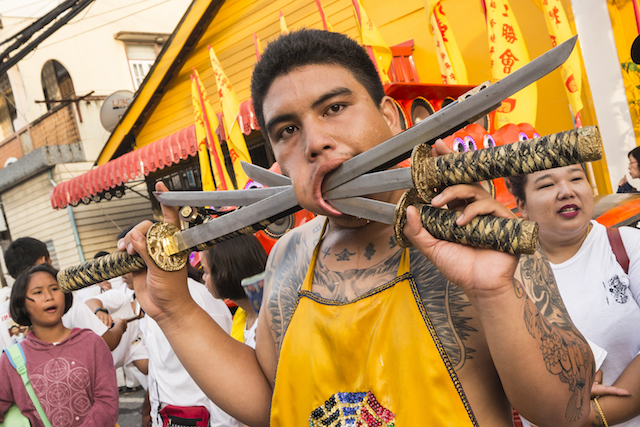
The Vegetarian Festival (or Jay Festival) is a nine-day Taoist celebration, beginning on the eve of the ninth lunar month of the Chinese calendar, celebrated primarily across Southeast Asian countries such as Malaysia, Singapore, Indonesia and Thailand by the Taoist Chinese community. In Thailand, the festival is called Thetsakan Kin Che. It is celebrated throughout Thailand, but the festivities are at their most vibrant in Phuket, where over half of the population are Peranakans, Chinese immigrants from the southern provinces of China who arrived in significant numbers into Phuket between the 14th and 17th centuries.
A visit to the Thai Hua Museum in Phuket Old Town, a worthwhile experience if you are curious about Phuket’s history, will tell you why so many Perenakans turned up on Phuket’s shores from China. It was all to do with the island’s tin mining and rubber tree tapping past. These booming industries required large labour-forces, and with China a relatively poor country at the time, people could secure better economic prospects in Southeast Asia. This was back-breaking work, brutal jobs the indigenous Thai’s didn’t fancy !
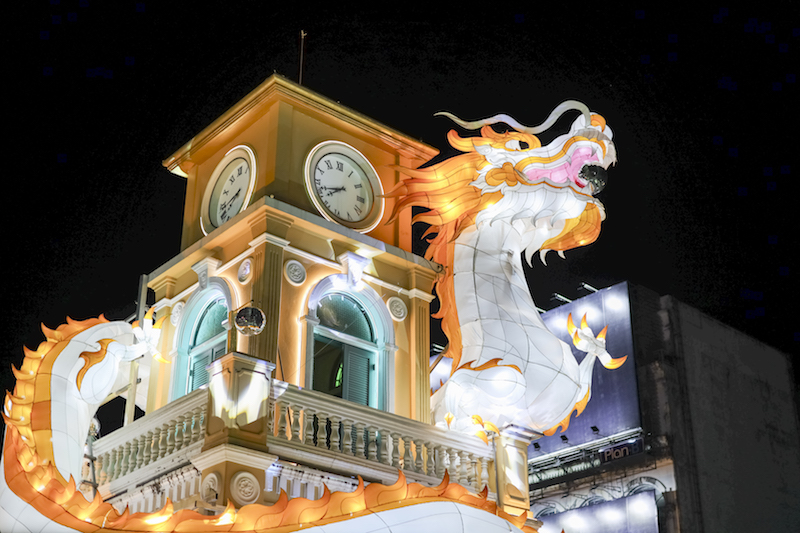
You may have figured out that the number ‘nine’ is a pivotal number with the Vegetarian Festival: it runs for nine days, it begins in the ninth lunar month of the Chinese new year, and most importantly it vernerates the Nine Emperor Gods. According to Taoist folklore the Nine Emperor Gods are actually high-ranking Star Lords who preside over the movement of planets and coordinate mortal life and death issues. To honour the Nine Gods and seek divine spiritual guidance participants on earth cleanse themselves by wearing only white, observing strict vegetarian diets and engaging in acts of self-purification, which for the devout includes piercing their bodies with sharp objects and walking across patches of red-hot coals in displays of faith and spiritual strength.
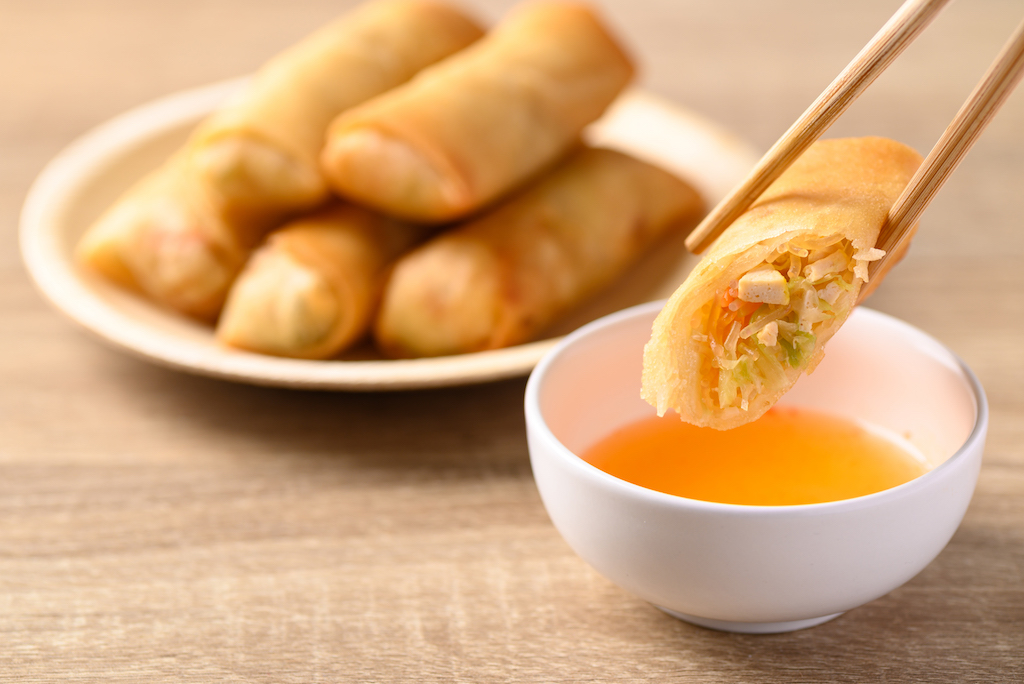
Vegetarian street food stalls are everywhere! You’ll know when you are approaching such an area as the traffic will be coming to a standstill, fire crackers will be popping and the streets are decorated with red and yellow bunting. Look out for the bright 2-character ‘jay’ sign. Noodle dishes, curries and soups are the most popular, they are all prepared without meat, fish sauce, eggs or dairy products. Realistic vegetarian meat substitutes, such as tofu, are used instead.
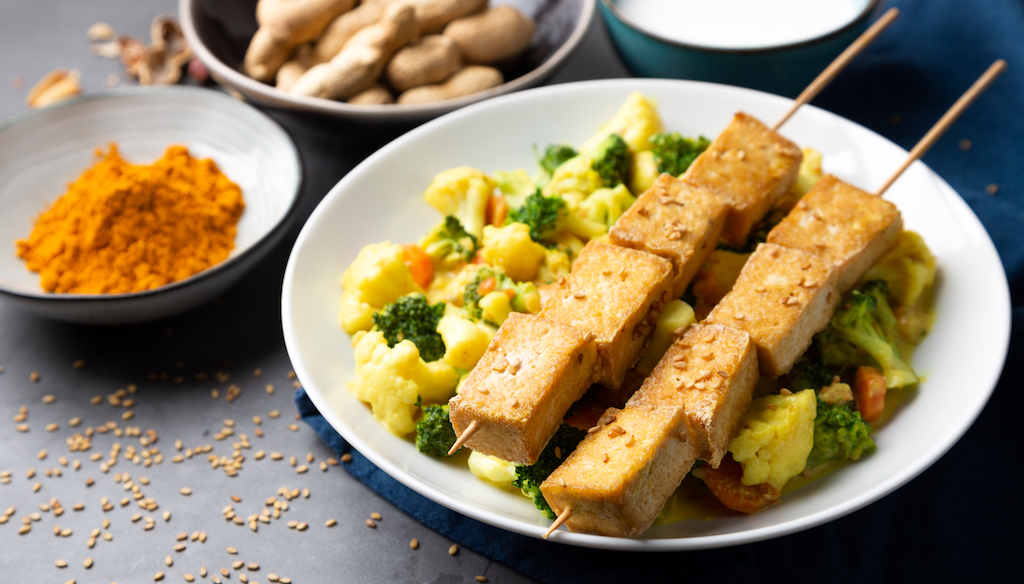
The dishes are also devoid of garlic, chili and other strong spices; it’s a serious vegan deal ! My particular favourites are the Por Pia Thod (a crispy fried spring roll with sweet plum dipping sauce), Tofu Satay (grilled tofu on a stick with peanut dipping sauce) and the Gang Jued (a clear vegetable soup flavoured with tofu, mushrooms and green vegetables)
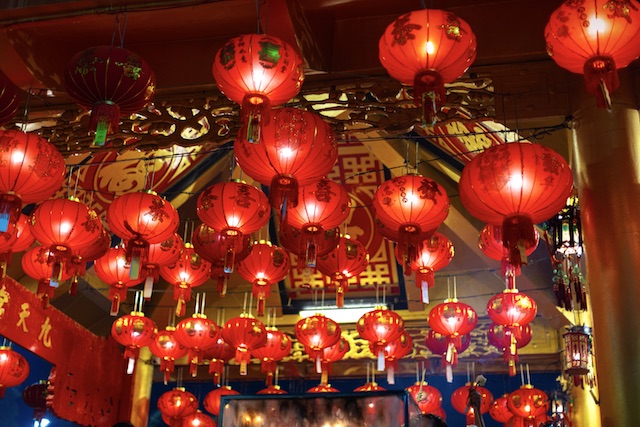
Here’s my pick of the best locations in Phuket to enjoy the Vegetarian Festival, taking place on 3 – 11 October 2024:
PHUKET OLD TOWN: The heart of the festival, where most of the processions, rituals, and street food stalls are concentrated.

KATHU SHRINE: Known for its intense displays of self-mortification rituals, including body piercing and firewalking.

BANG NEOW SHRINE: Another prominent shrine where devotees gather to witness various rituals and ceremonies.
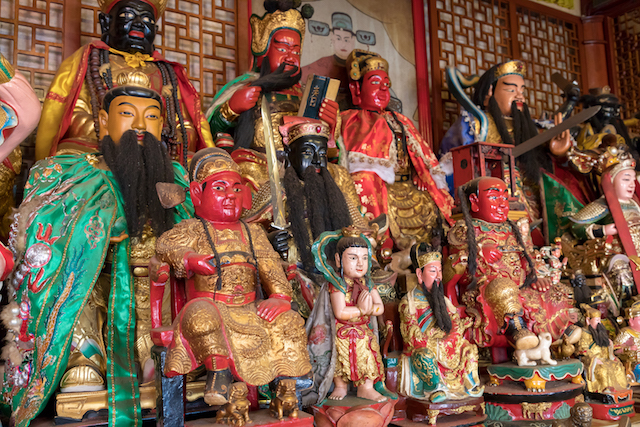

JUI TUI SHRINE: One of the oldest and most significant shrines in Phuket Town, hosting colourful processions and ceremonies throughout the festival.

SAPAN HIN PARK: Offers cultural performances, food stalls, and a festive atmosphere in a parkland setting.

SAM HONG HOO CHERNGTALAY SHRINE: A small shrine, with a busy food stall area, including firewalking, It is situated a few metres from Cherng Talay Police Station.