


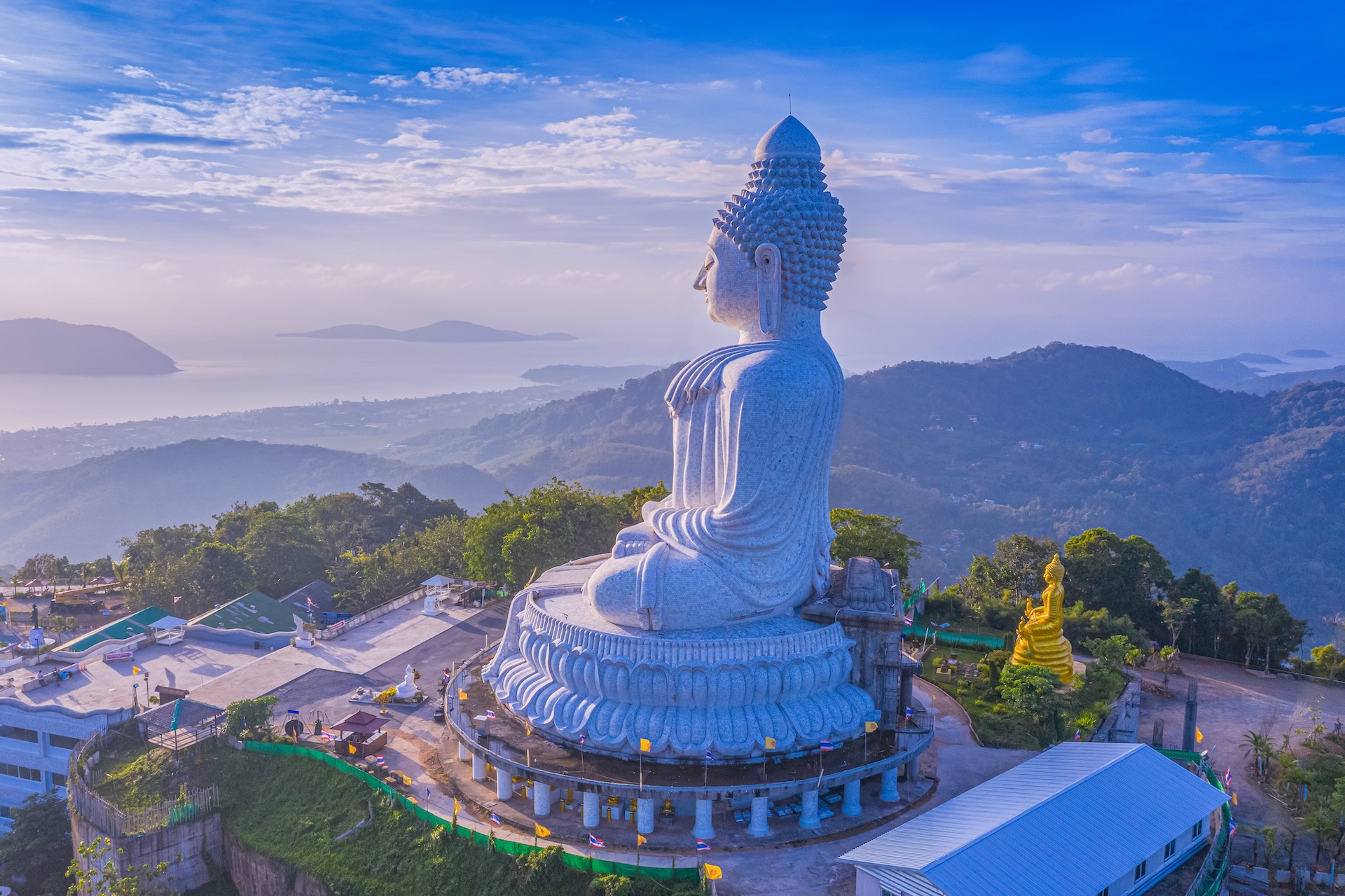
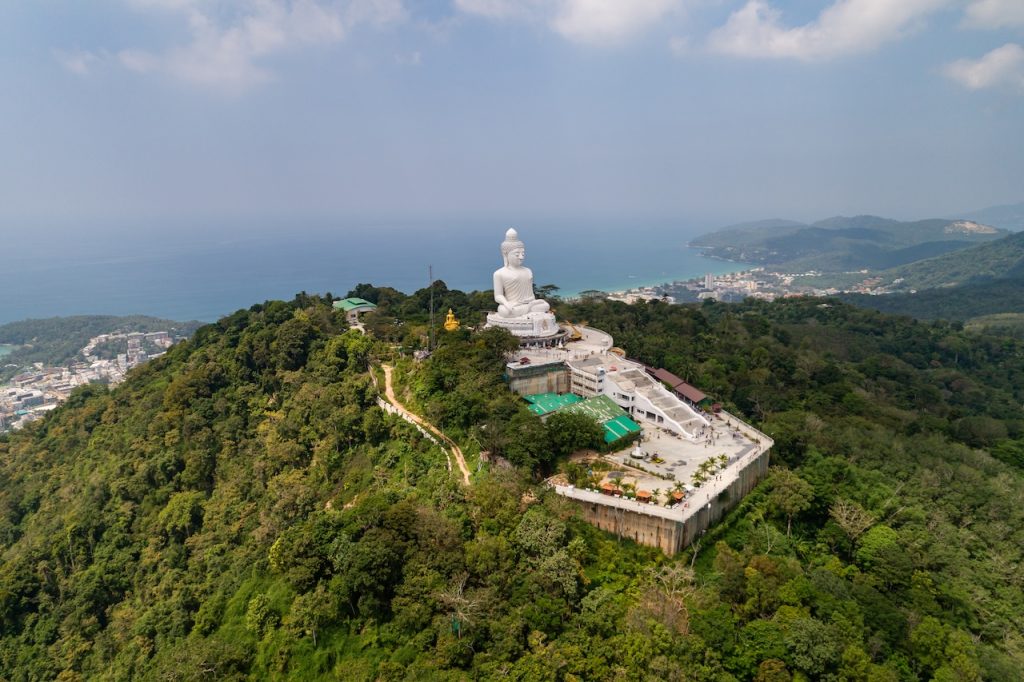
Rising 45 metres above Phuket’s hills, the Big Buddha commands the island’s southern skyline from its perch atop Nakkerd Hill in Chalong. This gleaming marble statue, visible from nearly every corner of the island, continues to amaze–even after multiple visits. There’s something about its presence–both commanding and peaceful–that draws you back.
By: Andrew McKenzie
A Monument With Meaning
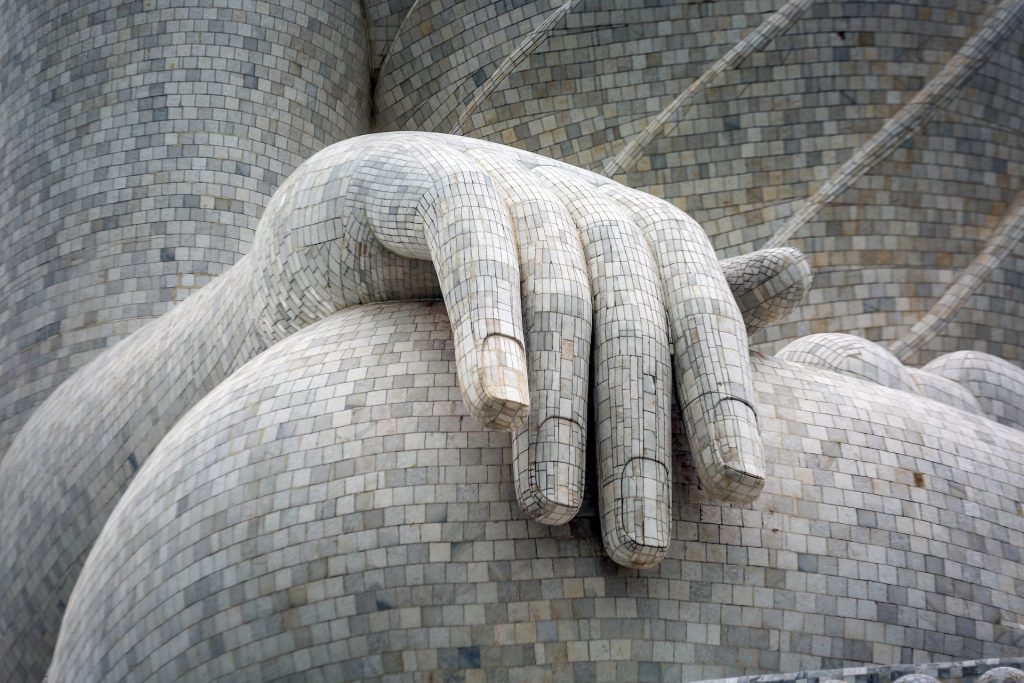
Officially known as Phra Phutta Ming Mongkol Akenakakiri, the Big Buddha is more than an impressive statue. Constructed from Burmese white jade marble, it depicts Buddha in the Maravijaya pose—the moment of enlightenment when Buddha touched the earth to witness his victory over worldly temptations. One hand reaches toward the ground while the figure maintains perfect calm, a reminder that true peace comes from overcoming life’s distractions.
The monument is currently under reconstruction with the interior closed to visitors, but this doesn’t diminish its impact. If anything, the ongoing work adds to the sense that this is a living, evolving sacred space rather than a static tourist attraction.
The Journey Up
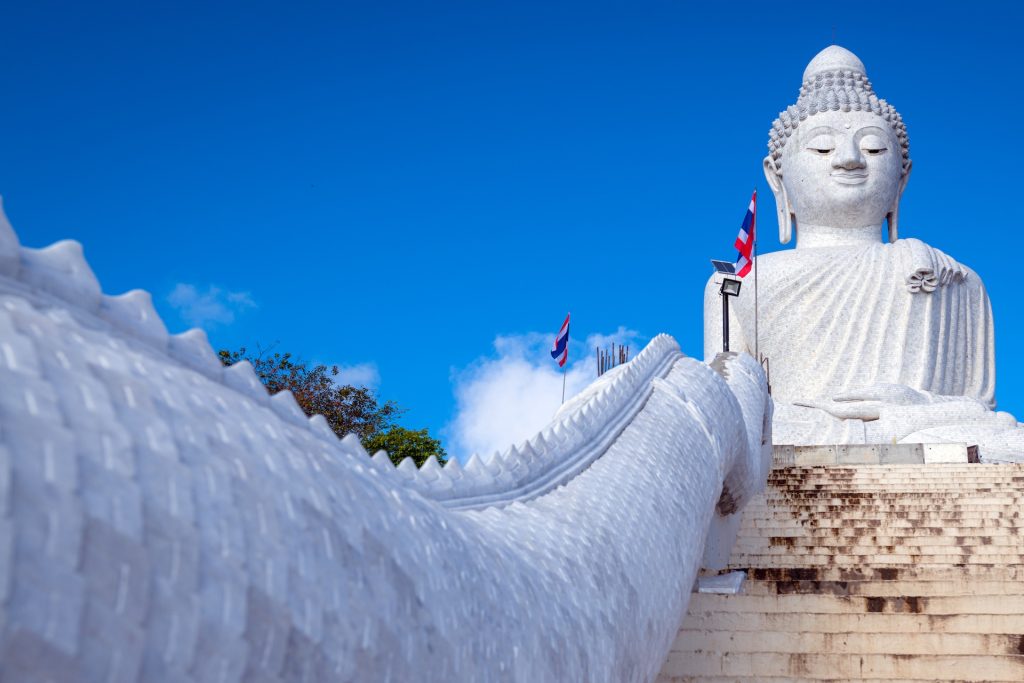
The winding road to Nakkerd Hill builds anticipation with each turn. Dragon statues frame the final approach, their intricate carvings adding mythical gravitas to the experience. The climb itself becomes part of the visit–a short but sometimes steep ascent that rewards you with increasingly spectacular views.
At the summit, you’ll find the Big Buddha isn’t alone. Smaller Buddha figures and statues of revered monks create a community of spiritual presence around the main monument. The scale hits you immediately–standing before this 45-metre figure, conversations naturally drop to whispers.
Interactive Traditions
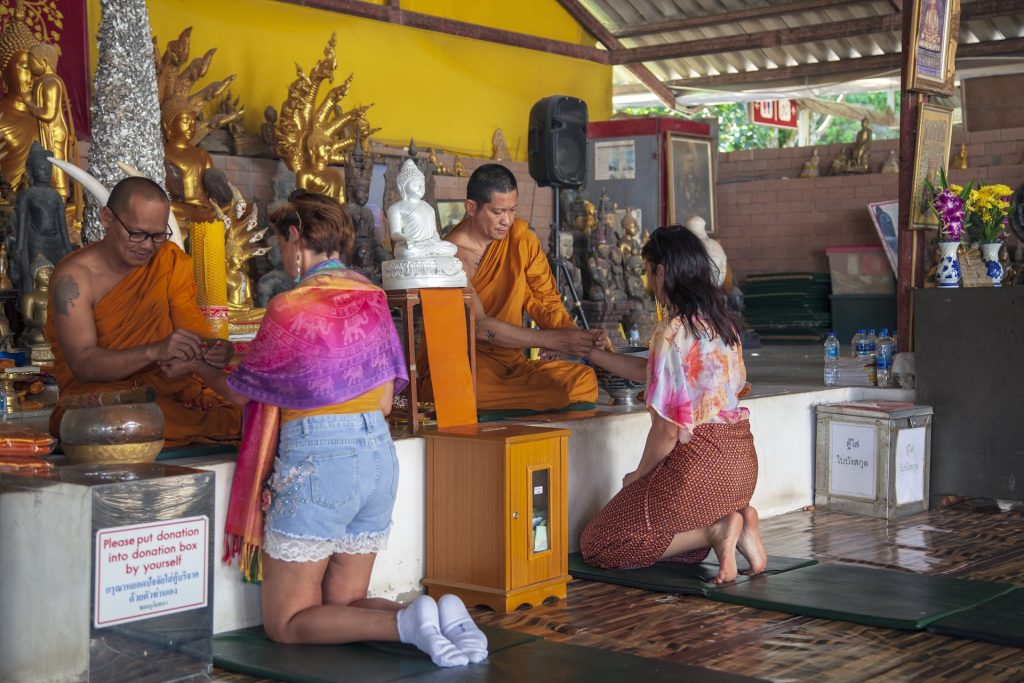
What makes this place special is how it invites participation. Visitors can write wishes on marble tiles, adding their hopes to thousands of others, or ring the ceremonial bells and gongs that are said to bring good fortune. These simple acts connect you to Buddhist merit-making traditions, transforming a sightseeing stop into something more meaningful.
The sound of those bells carries across the hilltop, mixing with the wind and distant traffic from below–a reminder that sacred and everyday worlds exist side by side.
Views That Deliver
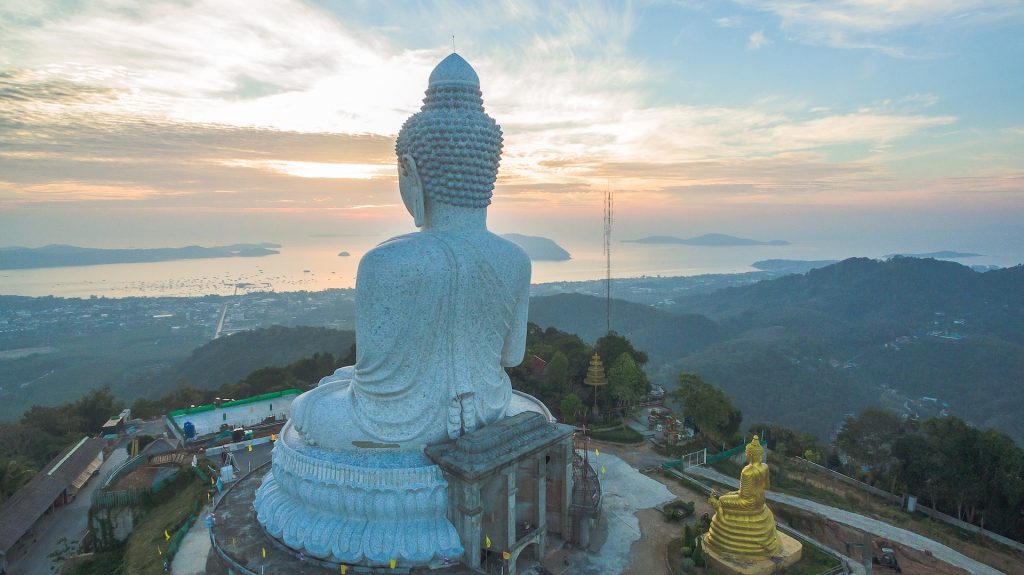
The panoramic views from the Big Buddha are genuinely breathtaking. From this height, you can see Phuket Town sprawling below, Chalong Bay stretching toward the horizon, and the endless blue of the Andaman Sea. The best times to visit are early morning, when golden light bathes the statue, or near sunset, when the sky explodes with colour.
These aren’t just pretty views—they’re part of the experience. There’s something about seeing the island spread out below that puts your own visit, and maybe your own concerns, into perspective.
Practical Information
Getting There: The site is easily accessible by car or motorbike via a well-maintained paved road. Ample parking is available at the base. Feel free to walk.
Cost: No entrance fee, though donations are welcomed.
Dress Code: Modest dress is required–shoulders, arms, and knees covered. Sarongs and shawls are available for rent if needed.
Best Times: Early morning or late afternoon to avoid midday crowds and heat.
Extending Your Visit
After your time at the Big Buddha, consider stopping at nearby restaurants around Kata Karon or Chalong. Full of restaurants with local and international dishes, I would recommend Kata Noi Star Mountain Sunset Restaurant, a perfect spot to process what you’ve just experienced, or even drive down to Kan Eang pier and let the horizon hold your focus.
A Different Kind of Phuket Experience
There’s something oddly reassuring about knowing the Big Buddha is always there, watching over the island’s chaos from above. While Phuket spins through its daily cycle of beach clubs and night markets below, this marble figure maintains its calm—a fixed point in all the motion.
What strikes me most after multiple visits isn’t just the views or even the spiritual atmosphere, but how the place seems to slow time down. Maybe it’s the climb, maybe it’s the bells, or maybe it’s simply being 300 metres above sea level with nothing but sky around you. Whatever it is, you leave feeling like you’ve had a proper break from the island’s relentless energy.
That’s rare in Phuket, and worth the trip up the hill.