


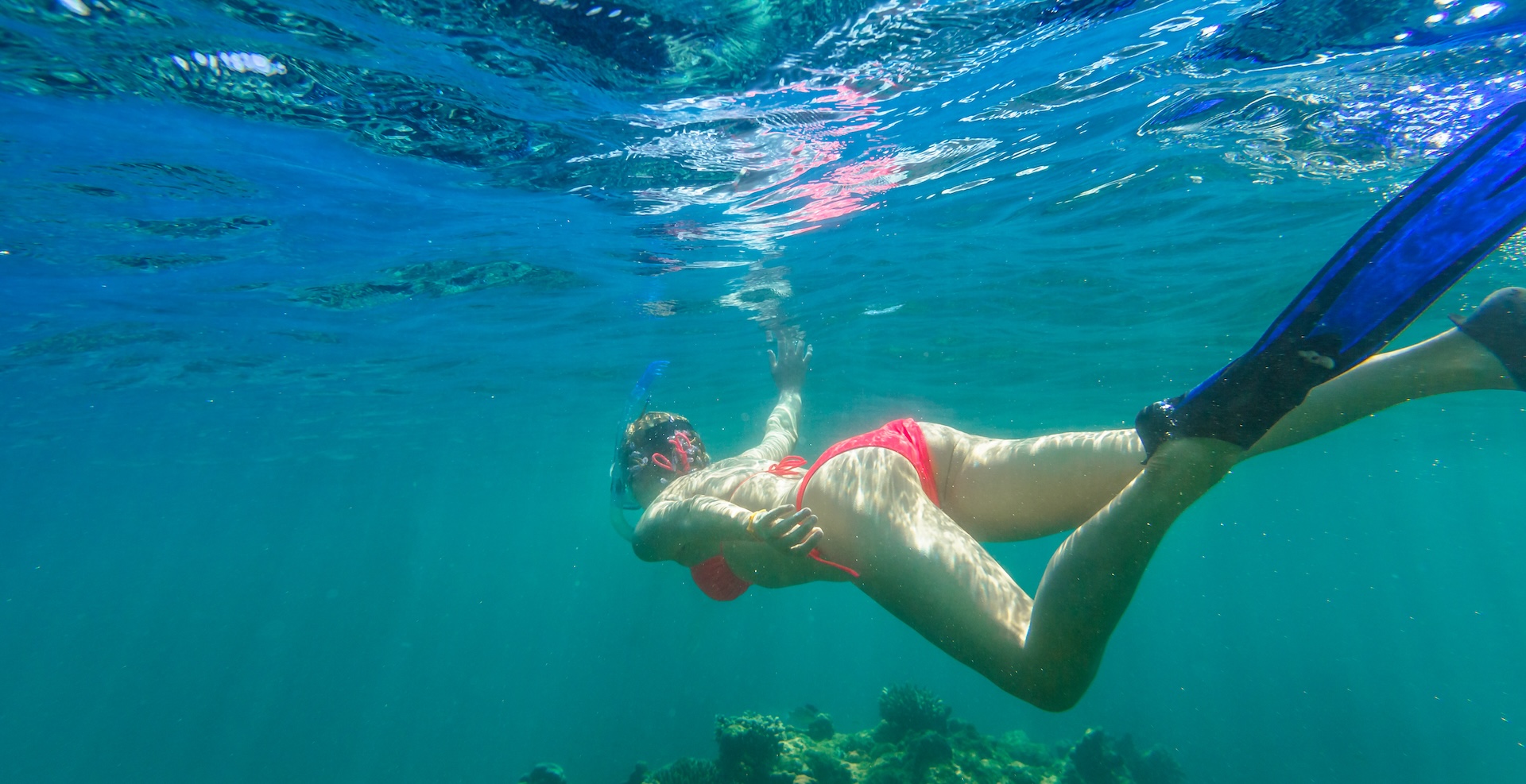
Phuket’s 400 kilometers of coastline are a snorkeller’s wonderland, particularly on the west coast, where every beach has rocky headlands at each end, offering perfect conditions and habitats for snorkelling adventures. Most of the island boat tours offer itineraries that include snorkelling stops, usually with equipment thrown in. Here is a collection of sea creatures you could encounter underwater if you, so slip on your fins and put on your mask, they’re all waiting for you.
By: Roger Osbourne
BANDED SEA SNAKE
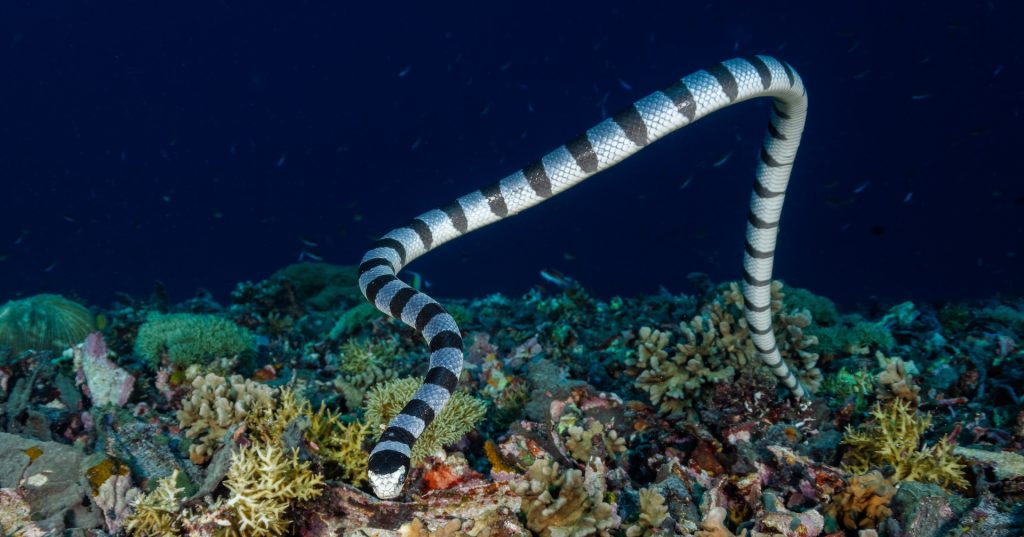
Also known as a ‘Yellow-lipped sea krait’, this is a venomous snake but it’s extremely docile and does its best to avoid humans. So don’t worry if you encounter one, it will swim away, and with a tiny mouth it can only bite certain small areas of the body, such as between your fingers. They are amphibious so they come ashore to rest.
BLACKSPOTTED PUFFER FISH
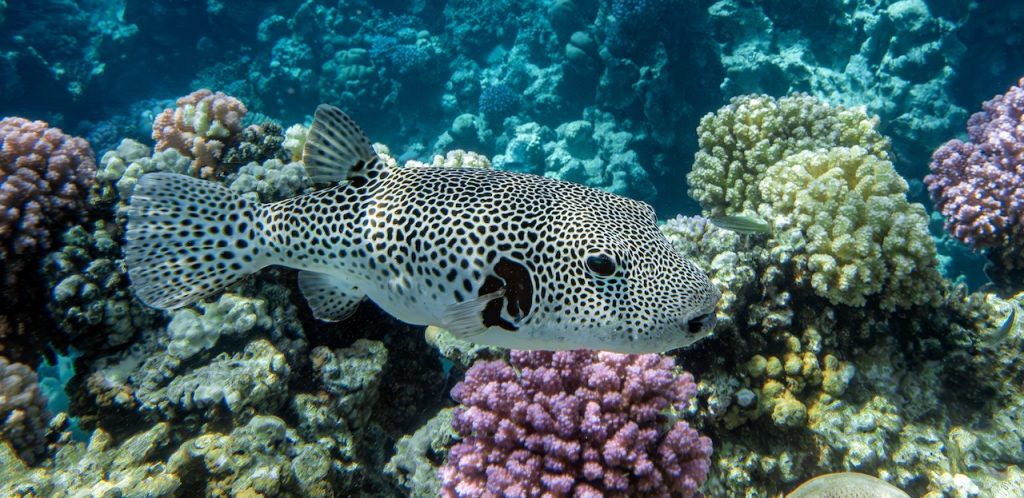
The reason they are called ‘puffer fish’ is because they inflate their bodies, by swallowing air or water, this is a tactic to ward off predators. They are small sized fish, which can grow up to 33 cm, and have different colourations, including yellow.. They are venomous and produce the poison tetrodotoxin, but this only becomes an issue if you eat one.
BLUE STARFISH
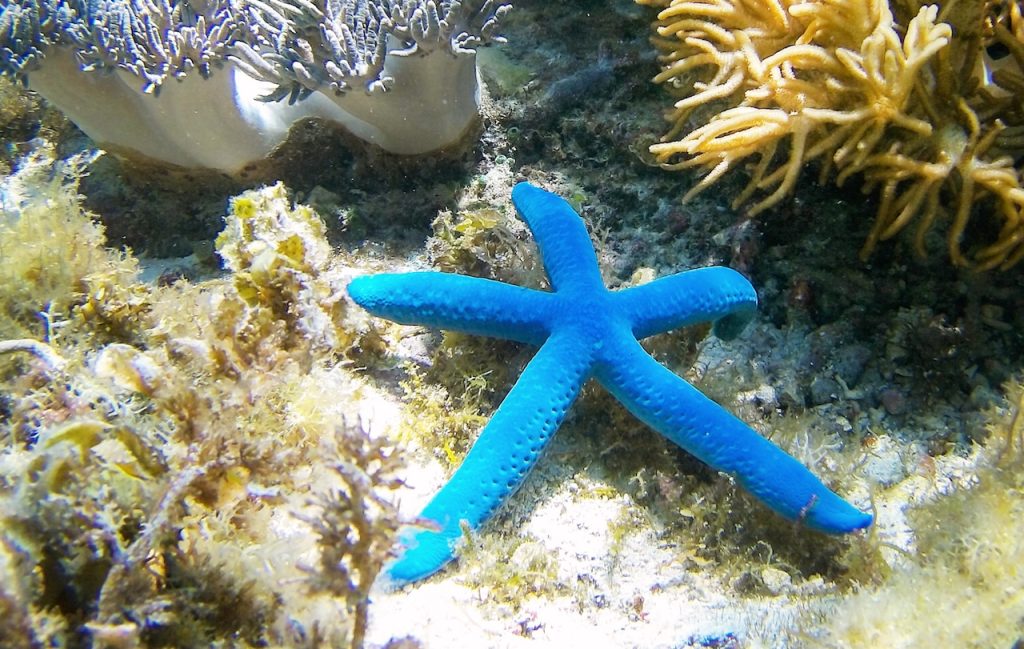
Easy to spot, this species of starfish is bright blue and common in the shallow water pool. They are possessed with remarkable regenerative capabilities, and endowed with powers of defensive autotomy, or self-amputation, against predators, which means they can shed appendages if they are attacked, so you often see them with a limb missing.
PARROTFISH
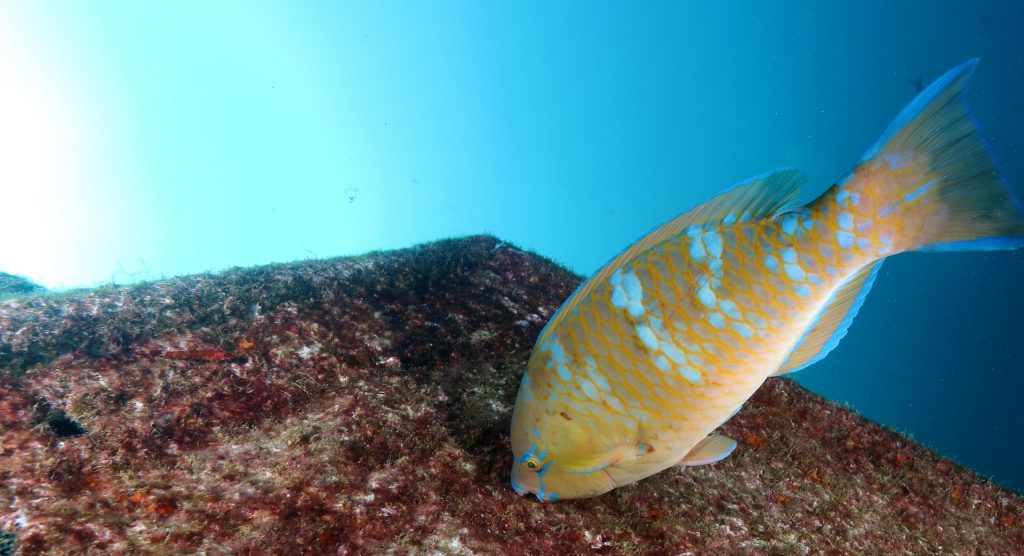
Pictured is the ‘Blue-barred’ variety. Parrotfish are named for their development of teeth, which is distinct from other fish. Their numerous teeth are arranged in a tightly packed mosaic on the external surface of their jaw bones, forming a parrot-like beak with which they rasp algae from coral and other rocky substrates.
CLOWN ANEMONEFISH
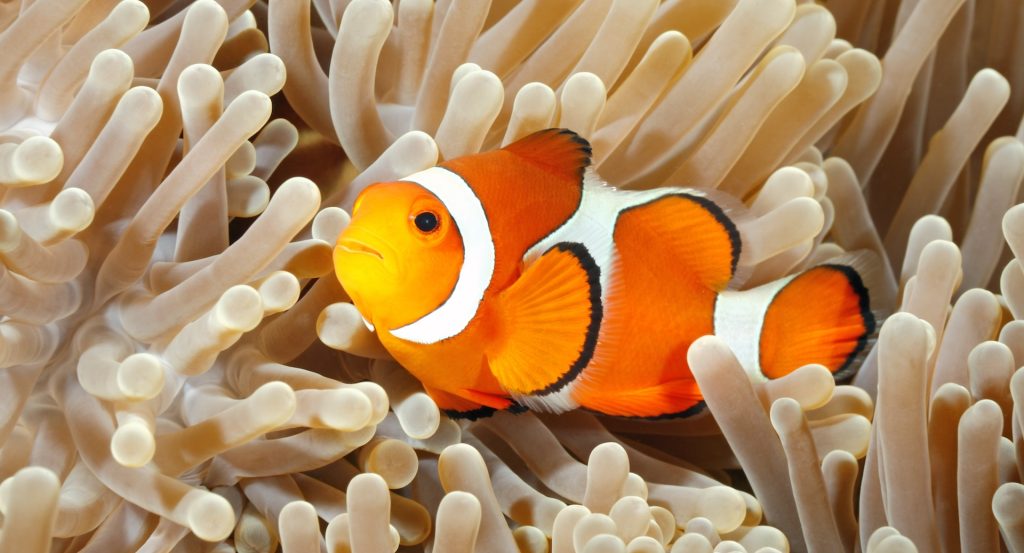
Known as ‘Nemo’ to kids around the world, this vividly coloured small fish takes refuge in wavey anemone corals, which will sting all of its predators. It’s a great arrangement for both fish and anemone, because the clown fish feed on undigested food from their host, and the anemone’s benefit from nutrients garnered from the faecal matter produced by the fish.
CUTTLEFISH
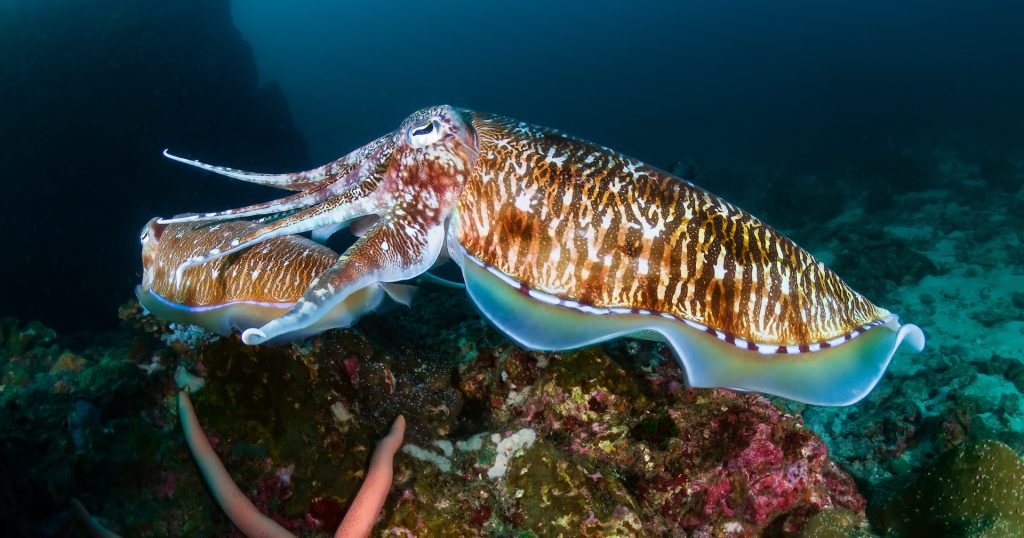
Related to squid and octopuses, Cuttlefish have a unique internal shell, the cuttlebone, which is used for control of buoyancy; you often find white cuttlebone washed up on the beach. Cuttlefish eat small molluscs, crabs, shrimp, fish, octopuses, worms, and sometimes other cuttlefish! Their predators include dolphins, larger fish (including sharks), seals, seabirds, and yes, other cuttlefish!
GIANT CLAM
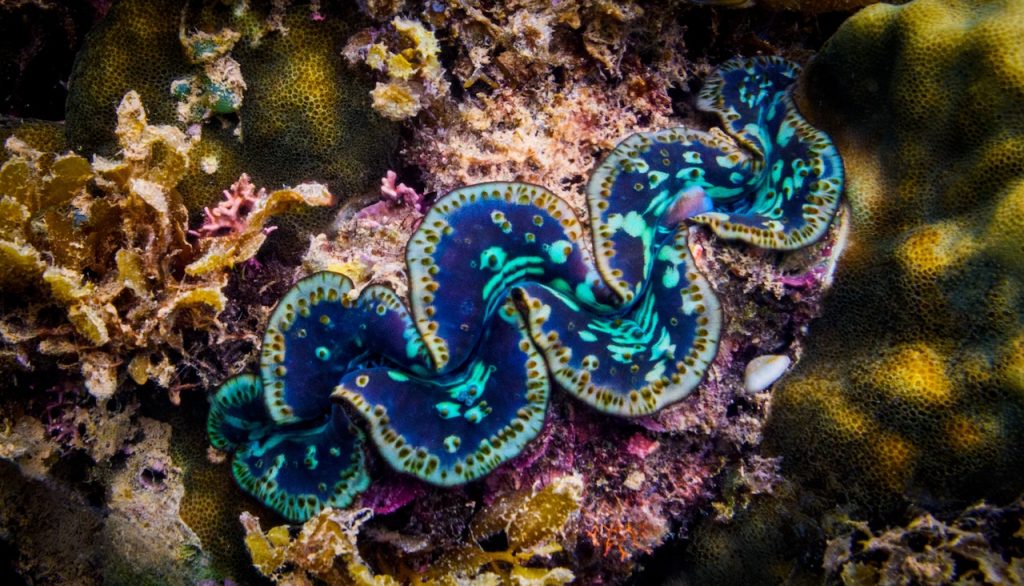
Even giants start life as babies, so you can see quite small clams. The largest recorded clam measured 137 cm in length and weighed in at 230 kg. All Giant Clams, including the babies have vivid blue, velvety, flesh inside their shells. Since giant clams cannot move themselves, they adopt broadcast spawning techniques to reproduce, releasing sperm and eggs into the water.
HAWKSBILL SEA TURTLE
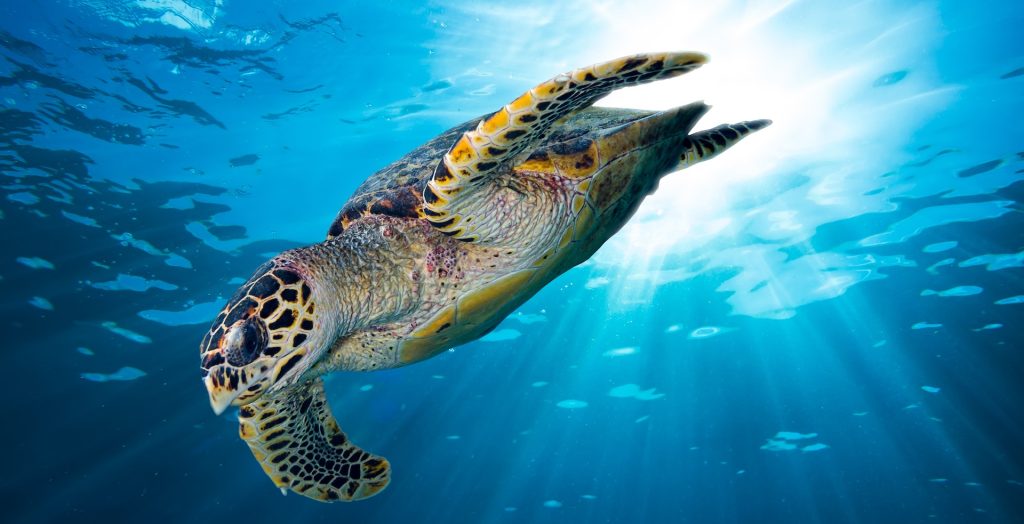
Common around Phuket waters, you are also likely to see Green Turtles off our shores. Adult turtles typically grow to 1 m in length, weighing around 80 kg on average. Several characteristics of the hawksbill sea turtle distinguish it from other sea turtle species. Its elongated, tapered head ends in a hawk beak-like mouth, which is more sharply pronounced and hooked than others.
LEOPARD SHARK
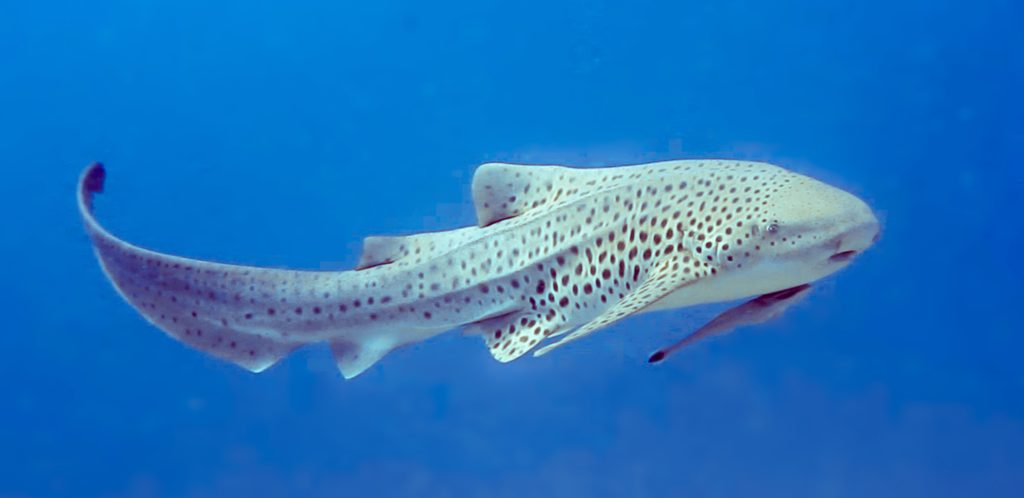
A harmless shark that feeds on clams, spoon worms, crabs and fish eggs. Most leopard sharks tend to remain within a particular area rather than undertaking long movements elsewhere, which has led to genetic divergence between populations of sharks living in different regions. Because of their diet they are found in shallow waters, as well as in the aquarium at Central Floresta shopping mall.
LIONFISH
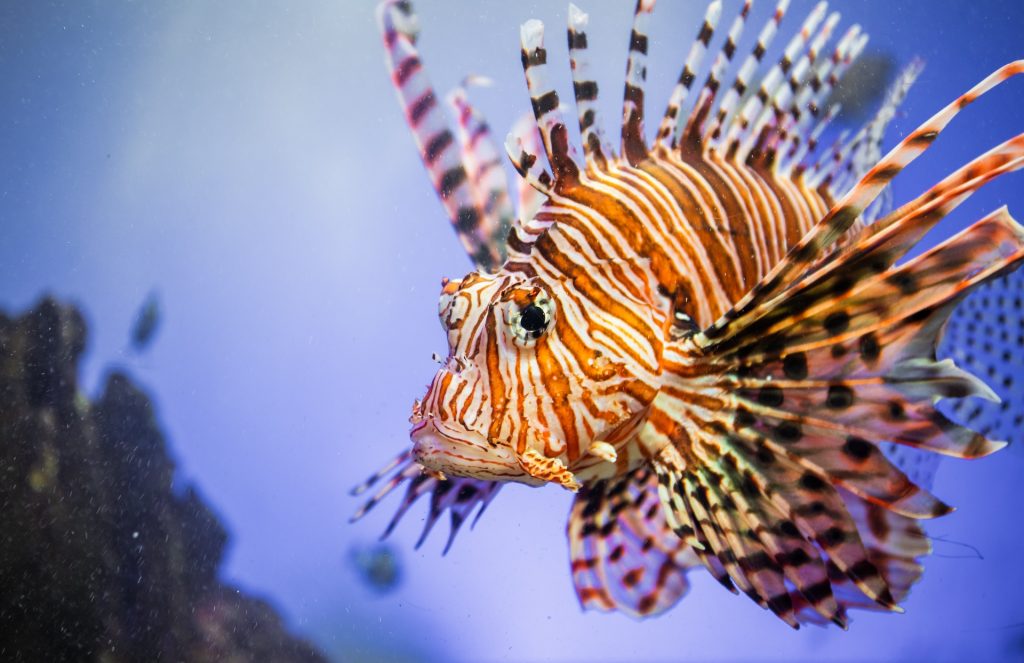
The most spectacular looking species of fish you are likely to see, but don’t handle them, they have poison at the tip of those tentacles. Native to the Indian Ocean, they have become an invasive species in the Caribbean and Mediterranean seas. A popular species for fish tank collectors, some have accidentally escaped and have breed ferociously out of control in parts of the world where they have no predators.
MOORISH IDOL
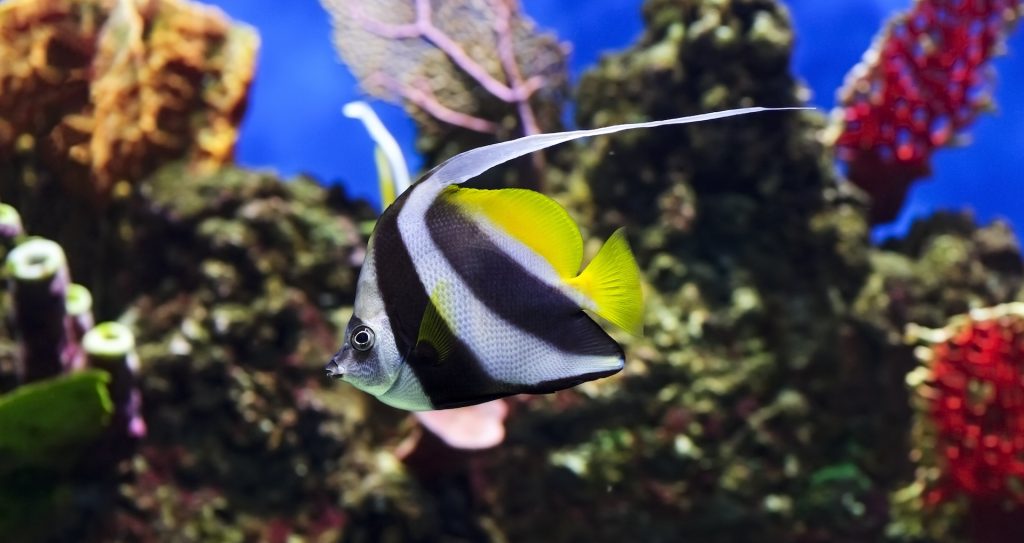
This is another star of the movie Finding Nemo, “Gill” was the scarred, wise-old character in the dentist’s fish tank. Moorish idol’s unusual name was apparently given to it because, in some areas of south-east Asia, fishermen have respect for these fishes, releasing them when caught and honouring them with a bow after their release. You’ll find them around Phuket, usually swimming alone or in pairs.
NUDIBRANCH
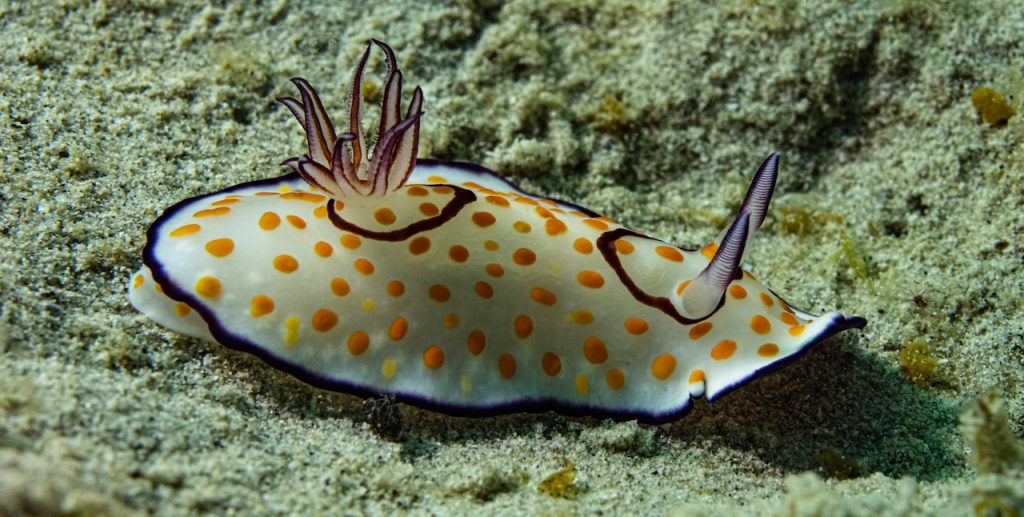
The most colourful of all the molluscs, they were born with shells but shed them after their larval stage. The word nudibranch comes from the Latin nudus ‘naked’ and the Ancient Greek (bránkhia) ‘gills’. They are small, so you will have to look carefully, but they are common in shallow waters around Phuket’s the shoreline
REEF OCTOPUS
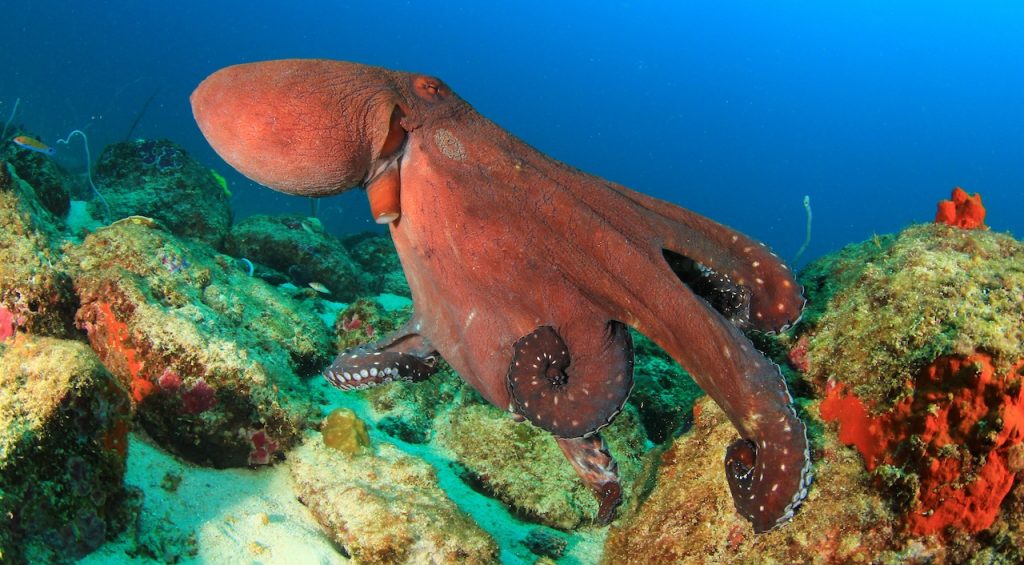
A wonder of nature, this eight-limbed, soft-bodied mollusk changes skin colour to blend in with the colour of the reef it is hiding on. It has a syphon that is used both for respiration and for locomotion, by expelling a jet of water. Octopuses have a complex nervous system and excellent sight, and are among the most intelligent and behaviourally diverse of all invertebrates.
SEA CUCUMBER
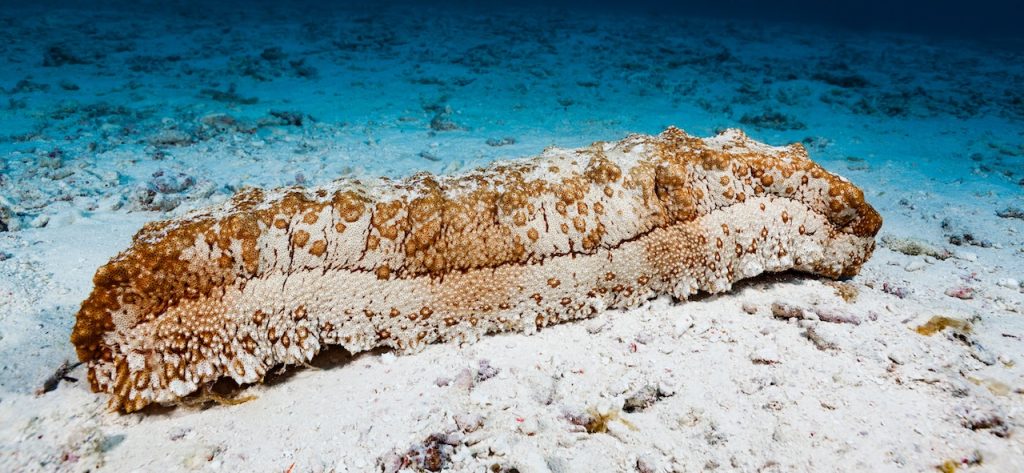
You’ll spot a sea cucumber on the sandy floors between crops of rock and coral. They need to be on the sandy bottom because it is here that they scavenge for decaying organic matter. They also have small tentacles that are used to catch passing plankton. Their body is the same density as water, so they can make long jumps (up to 1,000 metres), before falling slowly back to the ocean floor.
SERGEANT MAJOR FISH
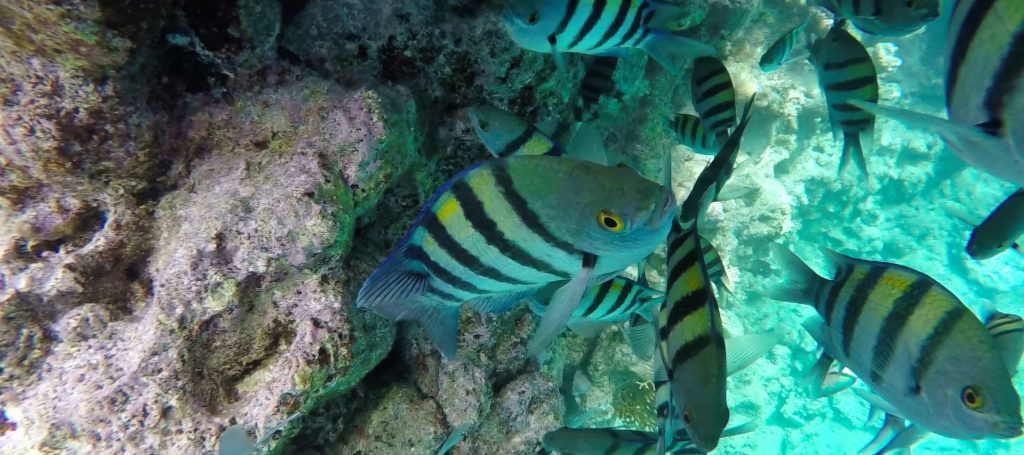
The yellow and black striped sergeant major is a species of damselfish, they are small, growing to a maximum length of about 25 cm. You’ll find abundant shoals of sergeant majors around Phuket waters. They earn their name from their brightly striped sides, known as bars, which are reminiscent of the insignia of a military sergeant major.
BATFISH
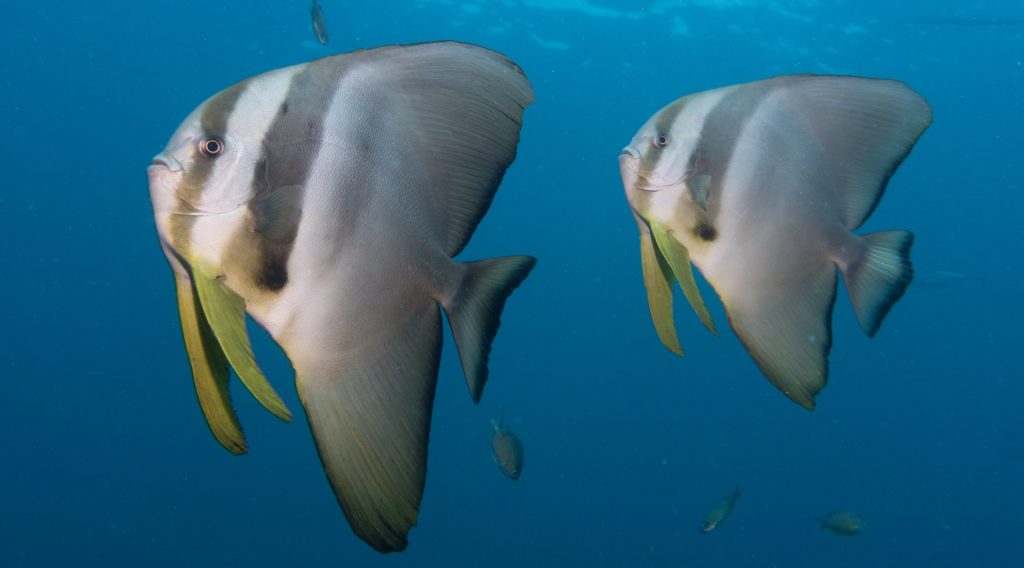
Swimming around in pairs, or small groups of 3 to 5, Batfish (platax to give them their genus name) are very inquisitive fish, and have no fear of swimming close to humans, especially if they think a meal is in the offing; I always bring a banana when I snorkel for this reason. Adults are disc-shaped fish, with laterally compressed bodies and large dorsal and anal fins that give a triangular profile.
TITAN TRIGGERFISH
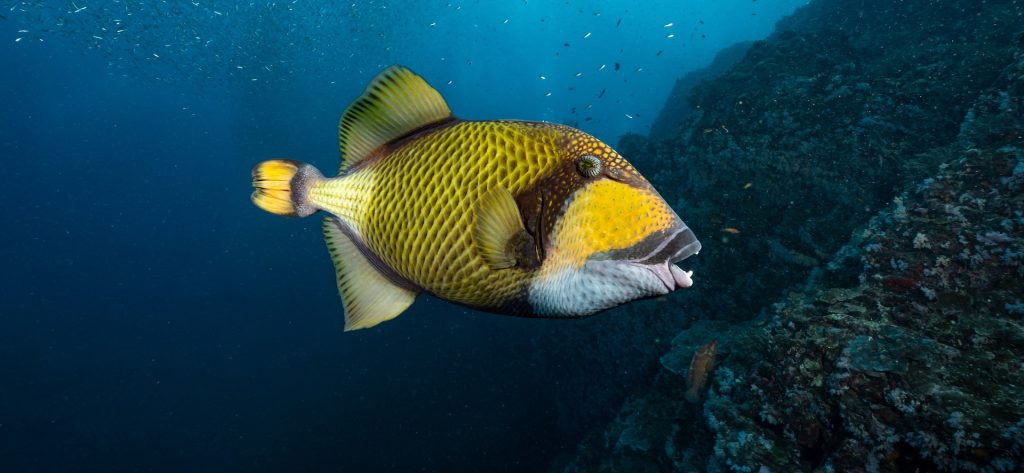
They have pouting lips, which cover sharp protruding front teeth, adapted to bite chunks of coral off the reef. They are solitary fish, but often attract smaller fish who hang around for the debris caused by a triggerfish feeding. Beware, females can be aggressive if you swim too close to their nests, not really an issue for snorkelers floating on the surface. They grow up to about 75 cm.